(Click PAGE MENU To See Topics Covered On This Page. Scroll down the page to see all Menu Topic Information. Click the X to close the page menu) PAGE MENU
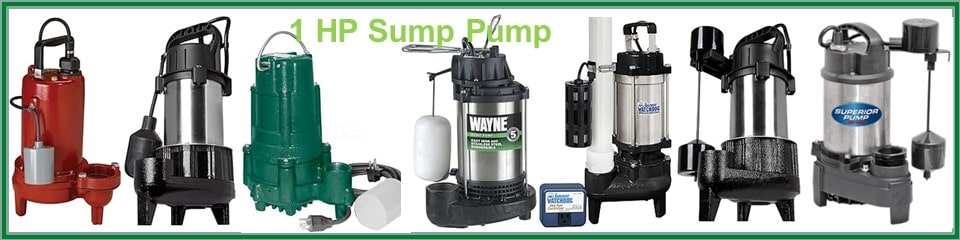
1 HP Sump Pump Best Models For Reliable Performance Year Round
Most homes rely on a 1/3 HP or 1/2 horsepower sump pump, but when flooding is frequent, the water table runs high, or heavy storms are common, a 1 HP sump pump provides the extra power needed to keep your basement safe. These high-capacity pumps are engineered to move large volumes of water quickly, making them ideal for homes at greater risk of water intrusion. The best 1 HP models don't just deliver raw pumping power, they combine quiet operation, long-term reliability, and dependable efficiency.
In this guide, we'll explain the key features that influence 1 HP sump pump performance, reliability, and power efficiency. Then we'll compare the top nine 1 HP submersible sump pump models to show which deliver the best balance of pumping capacity, durability, and year-round protection.
PAGE MENU
Click the Table Of Contents button to Hide it. Click it again to see it.
1 HP Sump Pump: Best Models for Reliable, Ultimate Performance Table of Contents
When choosing a 1 HP sump pump, a few key features that make one model stand out over another: pumping capacity, reliability and durability, and power efficiency. Paying attention to these details ensures you are not just buying power; you are buying lasting performance.
Pumping Capacity (GPH/GPM Flow Rate) - A sump pump's capacity is measured in gallons per hour (GPH) or gallons per minute (GPM). If the flow rate is too low, your sump pit may overflow during heavy rains. If it is too high, the pump may cycle on and off excessively, which can shorten the motor's lifespan. A pumps rate of moving water (performance) is affected by the discharge size and head height. The larger the discharge size, the more water is moved in less time. The greater the head height, the better the performance (GPM).
Reliability And Durability - The float switch is often the first point of failure. A snap-action vertical float is generally more dependable than a magnetic float in areas with hard water or mineral buildup. A sump pump that sits in water for extended periods needs to be durable, corrosion-resistant and capable of dissipating heat. Epoxy-coated cast iron housings are stronger and wear better than thermoplastic, aluminum, or zinc alternatives. Brand reputation does add to pump long-term reliability because reputable brands such as Zoeller, Liberty Pumps, Superior Pump, Red Lion, Little Giant or Wayne use high-grade materials, precision assembly, and rigorous testing which directly impact pump durability and efficiency over time.
Power Efficiency And Control - High Amp draw means higher energy bills and more strain on circuits. Automatic pumps activate only when water reaches a set level, while manual pumps keep running until they're unplugged. For most homeowners, automatic operation is the safer and more efficient choice.
1 HP Sump Pump Capacity, Flow Rate, and Performance Explained
When shopping for a 1 HP sump pump, it's easy to assume that all models move the same amount of water. But horsepower alone doesn't tell the full story. The real measure of performance is not just how powerful the motor is, but how efficiently the pump moves water, how high it can lift it, and how reliably it performs during heavy rain or flooding.
Because not all 1 HP sump pumps deliver the same pumping results, we'll break down the key performance factors that determine capacity, flow rate, and reliability. This way, you can choose a pump that delivers the power to handle big storms and gives the peace of mind that comes with year-round basement protection.
Flow Rate and Discharge Height
The first factor that defines a 1 HP sump pump's true capacity is its flow rate, often measured in gallons per hour (GPH) or gallons per minute (GPM).
Flow rate tells you how much water the pump can move within a specific time frame, but that number changes depending on discharge height, also known as head height. The higher the pump must lift water to reach your home's discharge point, the more resistance it faces, which reduces total flow.
A well-designed 1 HP sump pump maintains strong flow even at higher lift distances, ensuring fast, reliable removal during intense storms.
PAGE MENU
Discharge Port And Pipe Size
The discharge port and pipe size play a crucial role in how efficiently a 1 HP sump pump moves water. A wider discharge line, especially 2 inches instead of 1.5 inches, allows a higher volume of water to exit the pump with less resistance. When the discharge pipe is too narrow or has excessive bends, it creates backpressure that reduces flow rate and overall pumping performance.
Even the most powerful 1 HP pump will underperform if paired with an undersized or poorly designed discharge system. To achieve full rated capacity, the pump and plumbing must be properly matched so water flows freely from the pump, through the piping and to the outlet point.
Motor Efficiency and Design
A 1 HP sump pump's performance depends as much on motor efficiency as on raw horsepower. Two pumps may share the same power rating, but an efficient motor converts more of that electrical energy into actual pumping force. High-efficiency motors generate less heat, experience less wear, and maintain stronger flow over longer cycles.
Look for models with permanent split capacitor (PSC) motors and thermally protected designs, which run cooler, use energy more effectively, and extend the pump's lifespan. In short, an efficient motor doesn't just save power, it ensures consistent, high-volume pumping when your basement needs it most.
:
Summary: Bringing Pump Capacity And Performance All Together
A 1 HP sump pump's performance is defined by more than just horsepower. Real pumping power comes from the combination of flow rate, discharge height, motor efficiency, and discharge system design. A high-capacity pump with an efficient motor and properly sized discharge piping will move water faster and more reliably during heavy rainfall.
Understanding how these factors work together helps you look beyond the basic specs and choose a 1 HP sump pump that consistently delivers strong, dependable performance when your home needs protection most.
1 HP Sump Pump Reliability and Durability: Key Features That Ensure Long-Term Performance
While pumping performance determines how much water a 1 HP sump pump can move, reliability and durability determine how long it can do that job without failure. A sump pump operates in harsh, wet conditions, often cycling on and off hundreds of times during a single storm. For that reason, the materials, motor protection, and component design are just as important as horsepower. The most dependable models use corrosion-resistant housings, sealed bearings, thermal protection, and solid-state float switches to ensure years of uninterrupted service.
In this section, we'll break down the features that make a 1 HP sump pump truly reliable - and show how top models are built to withstand demanding, long-term use.
Pump Housing and Materials
The materials used in a 1 HP sump pump's housing have a direct impact on its durability and long-term reliability. Submersible pumps operate in constant contact with water, often carrying debris and exposed to corrosive conditions, so a corrosion-resistant housing is essential to prevent rust and damage over time.
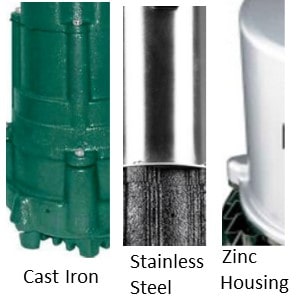
Cast iron and stainless steel are widely regarded as premium options, offering strength and longevity, while zinc provides lighter-weight, durable alternatives for less demanding applications.
Cast iron is the best housing material.
- Offers greatest strength and resistance to cracking, especially under heavy, continuous pumping; its inherent strength makes it the superior choice for durability, longevity, and handling debris in a sump pit.
- Dissipates heat better by effectively pulling heat away from the motor and dissipating it into the surrounding water which prevents motor overheating which extends pump life.
- Keeps the pump stationary during heavy continuous pumping because of its weight thus preventing pit wall float hang up.
- Accepts an epoxy-coated finish to prevent rust corrosion thus extending pump life.
Stainless steel is a good alternative housing material.
- Offers excellent corrosion resistance even better than cast iron.
- Weighs less than cast iron for those concerned about lifting the pump; cast iron is used for the base to add weight.
- Offers a better alternative than zinc, aluminum or thermoplastic.
Choosing a pump with a robust, well-constructed housing ensures that the motor and internal components remain protected, allowing the pump to deliver consistent performance year after year.
The float switch is often called the 'brain' of a 1 HP sump pump, controlling when the pump turns on and off. Even the most powerful motor can't protect your basement if the float switch is weak or faulty.
When the water reaches the ON height, the switch sends electrical current to activate the pump; when the water falls to the OFF point, it cuts power and stops the pump.
A reliable, well-designed float switch ensures the pump operates correctly every time, protecting your home from flooding and preventing unnecessary wear on the motor.
Float Switch Design and Reliability
The design of a float switch directly affects a 1 HP sump pump's reliability and motor longevity. Here are the main types:
Tethered Float
.
Tethered floats allow longer pump cycles, which reduces stress on the motor. However, the sump pit must be large enough for the tether to swing freely; otherwise, it may get caught and cause operational issues.
Vertical Float
Vertical floats take up less pit space and provide controlled movement, but the shorter distance between the ON and OFF points leads to more frequent starts and stops, increasing motor wear.
- Magnetic Vertical Floats have exposed connections that can be affected by groundwater contamination (such as calcium carbonate), leading to eventual switch failure. .
- Snap-action Vertical Floats, which are resistant to groundwater contamination, experience friction and heat over time, gradually wearing out the switch connectors. Despite this, snap-action vertical floats are tested for up to 1 million pump cycles, equivalent to roughly 9 years of pumping under typical conditions (181 days per year, 2 hours per day, 5 cycles per minute)..
Electronic Switch
Electronic switches offer a modern, low-maintenance alternative with no moving parts, making them highly reliable. Some models, like the HydroCheck HC6000v2, allow customization of the ON/OFF cycle and are unaffected by groundwater contamination, friction, or mechanical wear.
Electronic switches use a piggyback plug so any sump pump using a piggy back plug, can be set up to bypass the float switch by tying the switch cord out of the way and plugging the pump motor into the back of the electronic piggyback switch controller.
PAGE MENU
Summary - Bringing It All Together For The Float Switch
Choosing the right float switch design is crucial for a 1 HP sump pump's long-term reliability.
- Tethered floats reduce motor stress with longer cycles but require more pit space.
- Vertical floats save space but can increase motor wear and may be affected by groundwater contamination.
- Electronic switches offer low-maintenance, highly reliable operation with no moving parts.
Understanding the pros and cons of each design helps in the selection of a float switch that balances space, performance, and durability, ensuring your sump pump operates effectively for years.
Impeller
The impeller is a critical component in the reliability and performance of a 1 HP sump pump. It spins at high speeds to create the suction and pressure needed to lift water from the sump pit and discharge it efficiently.
A well-designed impeller improves pumping efficiency, reduces motor strain, and helps the pump handle debris without clogging.
Choosing a pump with a robust impeller ensures consistent water flow, minimizes wear over time, and contributes to the long-term durability of the sump pump.
How An Impeller Design Impacts Reliability
The design and material of a 1 HP sump pump impeller have a direct effect on both performance and long-term reliability. Key considerations include:
- Maintains Flow Rate
A strong, well-designed impeller ensures the pump consistently moves the large volumes of water that a 1 HP motor can handle. Cast iron impellers are the most durable and reliable, while stainless steel impellers offer excellent corrosion resistance. Thermoplastic impellers are lighter and less expensive but are more prone to cracking, warping, or wearing out when exposed to nicks, debris, or overheating.
- Handles Debris
Impellers designed with a vortex style can handle small debris commonly found in sump pits, helping prevent clogs. Non-vortex impellers are suitable only for clear water and are more likely to jam if silt or debris is present. Handling debris effectively protects the pump and ensures reliable operation over time.
- Protects the Motor
A high-quality impeller moves water efficiently, reducing strain on the motor. Less stress on the motor extends its lifespan and helps the pump maintain consistent performance under heavy use.
- Gives Longevity If Cast Iron
Cast iron impellers resist chipping and cracking, making them the longest-lasting option. Choosing a durable impeller material is one of the simplest ways to ensure your 1 HP sump pump remains reliable for years.
PAGE MENU
Motor
The motor is the heart of a 1 HP sump pump, and its quality determines how well the pump can handle heavy water loads without overheating or wearing out too quickly.
A high-quality motor is designed for continuous duty, meaning it can run for long cycles during storms without failure. With a strong motor at its core, a 1 HP sump pump delivers the reliable power homeowners count on when water levels rise fast.
Factors Contributing to Motor Quality
A reliable 1 HP sump pump motor depends on smart design and durable internal components. The best pumps are built to handle extended run times, heavy water loads, and heat buildup without failure. Below are key motor design factors that directly impact performance and lifespan:
- Thermal Overload Protection
Most 1 HP sump pumps include automatic thermal shutoff protection to prevent the motor from burning out when it overheats. However, the overall pump design-how efficiently it cools and dissipates heat-determines how long the motor can operate before this protection activates. A well-engineered cooling system allows longer, safer operation during heavy-duty pumping cycles.
- Bearing Design
Ball bearings offer superior longevity compared to sleeve bearings. In a ball bearing system, small spherical balls roll smoothly between two metal rings, minimizing friction and heat. In contrast, sleeve bearings rely on sliding contact between a shaft and a sleeve or bushing, which creates more friction, more heat, and faster wear over time. Pumps with sealed ball bearings run cooler and last longer under demanding use.
- Sealing System
A dual mechanical seal system-featuring two seals arranged in series-provides maximum protection against water intrusion. This setup is ideal for continuous-duty applications and the higher internal pressures typical of 1 HP motors. For long-term durability, silicon carbide seals are the top choice, while the more common combination of carbon graphite and ceramic offers good protection at a lower cost.
Summary: Bringing Pump Reliability And Durability All Together
A reliable 1 HP sump pump is built with durability and long-term performance in mind. The most dependable models use cast iron or stainless steel housings that resist rust and corrosion, along with non-clog impellers that handle debris without jamming. Inside, a sealed motor with thermal overload protection and ball bearings ensures smooth operation during frequent or extended cycles.
The type of float switch also affects reliability; a tether, snap action vertical and electronic switch are less likely to stick compared to magnetic vertical floats in calcium carbonate contaminated ground water.
Additional features like a hardened stainless steel shaft, mechanical shaft seals, and a wide discharge outlet help reduce wear and prevent clogs.
Finally, reliability is reinforced by choosing a trusted brand backed with a strong warranty, often three to five years, giving you confidence that the pump will perform when you need it most.
1 HP Sump Pump Efficiency: What You Need to Know About Electric Power Usage
Power efficiency measures how much electricity a sump pump consumes while operating. In a 1 horsepower (HP) sump pump, efficiency reflects how effectively the motor converts electrical energy into the mechanical force needed to move water out of your basement.
However, not all 1 HP sump pumps are engineered equally: differences in motor design, impeller efficiency, and internal friction can lead to wide variations in both energy use and pumping performance.
While energy efficiency is valuable for lowering utility costs and reducing wear, your primary goal should always be meeting your home's pumping demands. A slightly higher energy draw is acceptable if it delivers the power and reliability needed for consistent flood protection.
Key Factors That Explain Power Efficiency
The power efficiency of a 1 HP sump pump depends on how effectively it uses electricity to move water. Three main electrical factors explain how efficiently a sump pump operates: voltage (V), amperage (A), and wattage (W). Not every pump lists an official efficiency rating, but understanding these measurements helps you compare real-world energy use between models.
- Voltage (V)
- Voltage represents the electrical pressure that pushes current through the motor, driving the flow of electricity. In the U.S., most residential sump pumps run on 115-120 volts, while some heavy-duty 1 HP models are designed for 230-240 volts.
- Pumps with higher voltage capability can operate more efficiently over long distances or under heavier loads, as they draw less current for the same power output.
-
- Amperage (A)
- Amperage, or current, is the amount of electricity actually flowing through the pump's wiring during operation.
- A typical 1 HP sump pump draws between 9 and 12 amps when running on a 120-volt circuit.
- Pumps working against higher heads or longer discharge lines draw more amps, which increases electrical demand and operating cost.
- Monitoring amperage helps assess how efficiently a pump converts energy into water flow.
Wattage (W)
- Wattage measures the total electrical power a sump pump consumes during operation.
- In theory, a 1 HP motor converts 746 watts of electrical energy into mechanical energy.
- Because no motor is 100% efficient, a 1 HP sump pump typically uses 1,000-1,500 watts depending on design and load.
- Comparing wattage among similar 1 HP models helps identify which pumps use less electricity for the same pumping performance.
- You can estimate actual power draw using the simple formula: Volts × Amps = Watts Used.
Summary: Bringing Pump Efficiency All Together
Understanding how voltage, amperage, and wattage interact helps you judge the real efficiency of a 1 HP sump pump. A well-engineered pump uses electricity efficiently to deliver strong, consistent water flow without overloading the motor.
When comparing models, look for pumps that achieve high pumping performance with moderate amp draw and total wattage-this balance indicates an efficient design that won't waste energy or shorten the pump's lifespan.
In short, the most efficient 1 HP sump pump isn't just powerful; it converts power into reliable protection at the lowest practical energy cost.
Summary: Pumping Capacity And Performance, Reliability, And Efficiency Working Together
Choosing the best 1 HP sump pump isn't about horsepower alone; it's about how well the pump converts that power into dependable water removal. The three major pillars: capacity and performance, reliability and durability, and power efficiency, work together to determine how effectively a sump pump protects your home.
A pump's capacity and performance depend on flow rate, discharge height, and hydraulic design. A truly capable pump moves large volumes of water quickly without losing pressure or efficiency, even during extended heavy rainfall.
Reliability and durability come from strong construction and smart design choices such as a cast iron housing, a dependable float switch, a robust impeller, and a well-sealed motor. These features ensure the pump runs smoothly and consistently over years of demanding service.
Finally, power efficiency reflects how effectively the motor converts electricity into pumping force. An efficient pump maintains high performance while drawing less power, keeping both energy costs and motor wear low.
When you combine these three strengths: performance, reliability, and efficiency, you get a sump pump that delivers maximum protection and long-term peace of mind.
In the next section, we'll identify the top 1 HP sump pump models for performance, reliability, and efficiency to see which models deliver the strongest results.
Top 1 HP Sump Pumps for Maximum Performance and Water Removal
Horsepower alone doesn't define how well a 1 horse power sump pump will protect your home from flooding. The following top models demonstrate that motor efficiency, head height (lift capacity), and discharge size play a significant role in pump performance.
- Strongest Flow at 0 feet: Liberty LE102A2-2 - 11,400 GPH (190 GPM). Flotec FPZT7550 - 6660 GPH (111 GPM), and Basement Watchdog BWSS100 - 6,540 GPH (109 GPM).
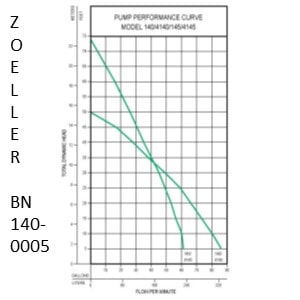
- Strongest Flow at 10 vertical feet: Liberty LE102A2-2 - 9,900 GPH (165 GPM), Flotec FPZT7550 - 4980 GPH (83 GPM), and Zoeller BN140-0005 - 4888 GPH (80)..
- Moderate Flow: Wayne CDU1000ET (57526-WYN3), Wayne CDU1000 (58321-WYN2) - 4,380 GPH at 10 feet, Little Giant 16EC-SSA-V - 4,320 GPH (72 GPM) at 10 feet) and Red Lion RL-SS100T - 4,300 GPH (71.5 GPM) at 10 feet)..
- Tallest Head (Maximum Lift): Wayne CDU1000ET (57526-WYN3), Wayne CDU1000 (58321-WYN2) - 4,380 GPH at 10 feet, Little Giant 16EC-SSA-V - 4,320 GPH (72 GPM) at 10 feet) and Red Lion RL-SS100T - 4,300 GPH (71.5 GPM) at 10 feet).
- Largest Discharge Size: Liberty Pumps LE102A2-2 (2 inches); Superior 92151 and Red Lion RL-SS100T 14942782 (2 inches though they also come with a 1-1/2 inch adapter).
Best 1 HP Sump Pumps for Unmatched Reliability and Durability
1 HP sump pump reliability is affected by pump housing, impeller design, motor build, type of float switch, and warranty.
Pump Housing By Model
- Best Pump Housing And Base: Cast Iron:Zoeller BN140-0005, and Liberty Pumps LE102A2-2.
- Next Best Pump Housing And Base: Stainless Steel and Cast Iron: Wayne CDU1000ET (57526-WYN3), Wayne CDU1000 (58321-WYN2), Basement Watchdog BWSS100, Red Lion RL-SS100T 14942782, Superior Pump 92151 and Little Giant 16EC-SSA-V..
- Least Durable Housing: Zinc: Flotec FPZT7550.
Float Switch Type By Model
- Most Reliable Mechanical Float Switch: Snap Action Vertical: Wayne CDU1000 (58321-WYN2),
- Next Most Reliable Mechanical Float Switch: Tether: Zoeller BN140-0005, Red Lion RL-SS100T 14942782,
- Least Reliable Mechanical Float Switch If Calcium Carbonate In Ground Water: Magnetic Vertical: Wayne CDU1000ET (57526-WYN3), Flotec FPZT7550, Superior Pump 92151 and Little Giant 16EC-SSA-V..
- Best Small Solids Handling: Cast Iron Vortex Impeller: Liberty Pumps LE102A2-2 and Red Lion RL-SS100T 14942782.
- Best Small Solids Handling: Nylon Vortex Impeller: Little Giant 16EC-SSA-V.
- Best Small Solids Handling: Thermoplastic Vortex Impeller: Superior Pump 92151, Flotec FPZT7550, Zoeller BN140-0005.
- Best Non-solids Clear Water Only Handling: Cast Iron Impeller: Basement Watchdog BWSS100.
- Budget-friendly Non-solids Clear Water Only Handling: Thermoplastic Impeller: Wayne CDU1000ET (57526-WYN3), Wayne CDU1000 (58321-WYN2)
Motor Design By Model
- Best Motor Design: Ball Bearings and Dual Shaft Seals: Liberty Pumps LE102A2-2, Red Lion RL-SS100T 14942782.
- Next Best Motor Design: Ball Bearings and Single Shaft Seals: Flotec FPZT7550, Wayne CDU1000ET (57526-WYN3), Wayne CDU1000 (58321-WYN2), Little Giant 16EC-SSA-V.
- Budget friendly motor design pumps: Sleeve Bearings and Single Shaft Seals: Zoeller BN140-0005, Superior Pump 92151, Flotec FPZT7550, Superior Pump 92151.
Most Energy-Efficient 1 HP Sump Pumps for Lower Utility Bills
- Most Energy Efficient: Average Pumping Performance: Basement Watchdog BWSS100: 115V x 6.3 Amps = 724 Watts; its pumping performance at 10 vertical feet is 4,440 GPH.
- Least Energy Efficient: Highest Pumping Performance: Liberty LE102A2 2: 230V x 8 Amps = 1,847 Watts; its pumping performance at 10 vertical feet is 9,990 GPH which is more than twice the pumping performance of the Basement Watchdog.
- Moderately Energy Efficient: Above Average Pumping Performance: Flotec?FPZT7550: 115V x 7.9 Amps = 908 Watts with a pumping performance at 10 vertical feet of 4,980 GPH.
- Average Energy Efficiency: Above Average Pumping Performance: Zoeller BN140-0005: 115V x 12 Amps = 1,380 Watts with a pumping performance at 10 vertical feet of 4,888 GPH.
- Average Energy Efficiency: Average Pumping Performance: Red Lion RL SS100T and Little Giant 16EC-SSA-V: 115V x 8 Amps = 920 Watts with a pumping performance at 10 vertical feet of 4,300 GPH; Wayne CDU1000ET (57526-WYN3), Wayne CDU1000 (58321-WYN2): 120V x 9.8 Amps = 1175 Watts with a pumping performance at 10 vertical feet of 4,380 GPH.
The Best 1 HP Sump Pumps: Top 9 Picks for Performance, Reliability & Efficiency
In the following section, we'll compare the Top 9 best 1 HP Sump Pumps from trusted brands, highlighting how their construction, design, and performance specifications translate into real results. Whether you're replacing an old unit or upgrading for stronger protection, this comparison will help you identify the model that offers the best combination of power, durability, and peace of mind for your home.
The Best 1 HP Sump Pumps: Top 9 Picks for Performance, Reliability & Efficiency
In the following section, we'll compare the Top 9 best 1 HP Sump Pumps from trusted brands, highlighting how their construction, design, and performance specifications translate into real results. Whether you're replacing an old unit or upgrading for stronger protection, this comparison will help you identify the model that offers the best combination of power, durability, and peace of mind for your home.
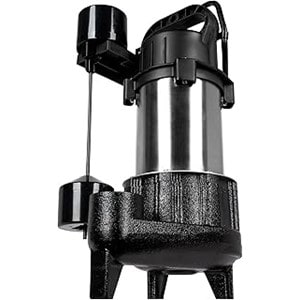
1. Wayne CDU1000 (58321-WYN2)
Wayne's CDU1000 is one of the most popular stainless-steel sump pumps for residential use.
Performance: Comparable 4,380 GPH (73 GPM) at 10 feet of lift. Maximum head height is 20 feet.
Reliability: Includes a more durable polycarbonate float switch, the snap action vertical float switch and sealed bearings to extend life. The snap action vertical float switch is not affected by ground water calcium carbonate tests to 1 million pump cycles. It's stainless steel pump housing will not rust and its cast iron base add weight to keep the pump from moving during heavy pumping. Known for its 5 year warranty.
Efficiency: Similar Amp draw as Wayne CDU1000ET (57526-WYN3) at 9.8 Amps. Includes 8 foot non piggyback power cord.
Best For: Those who need a float switch that will not be contaminated by ground water containing calcium carbonate, and do not have debris in the pit water.
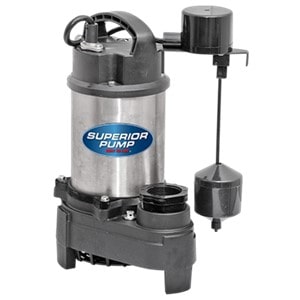
The Superior Pump 92151 is an affordable yet capable model with solid value for homeowners on a budget.
Performance: Moves around 4,500 GPH (75 GPM) at 10 feet; less powerful than premium models but reliable for average basements. Offers a maximum head height of 25 feet and a discharge port of 2 inches with a 1.5 inch adapter.
Reliability: Uses Stainless steel housing which is corrosion-resistant with cast iron base. The magnetic vertical float switch includes a piggyback plug with a power cord of 10 feet. Capable of passing small solids with its vortex impeller.
Efficiency: Draws 7.5 amps; runs quietly and efficiently for lighter-duty needs.
Red Lion RL-SS100T is a solid all-around performer blending affordability with robust construction.
Performance: Moves 4,300 GPH (71.5 GPM) at 10 feet, capable of handling average-demand basements. Its maximum head height is 23 feet. The discharge port is 2 inches in diameter with a 1.5 inch adapter.
Reliability: Stainless steel housing and cast iron base resist corrosion and vibration damage. Its tether float switch requires an 18 inch wide pit. Known for its 5 year warranty.
Efficiency: Reasonably efficient PSC motor with 8 Amp. Its piggy back power cord is 20 feet.
Best For: Homeowners needing reliable, strong performance at a midrange price point.
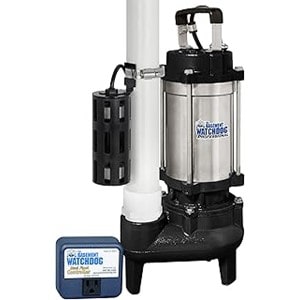
Basement Watchdog BWSS100 is a feature-rich stainless steel model designed for reliability and safety.
Performance: Delivers up to 4,440 GPH (74 GPM) at 10 feet. Narrow 9 inches wide for a good compact submersible design. Offers a 25 foot maximum head height and a 2inch discharge port with a 1.5 inch adapter.
Reliability: Features a dual float switch for redundancy, stainless steel housing, and built-in thermal protection. Its cast iron base adds weight for stability. It does not handle small solids.
Efficiency: Uses a PSC motor that runs cooler and more efficiently than shaded-pole motors. Its Amp usage is the lowest at 6.3 Amps. The piggyback power cord is 10 feet.
Best For: Homeowners who want peace of mind with modern protection features and float switch backup.
This version of the Wayne CDU1000 offers similar specs except for switch configuration. The float switch is magnetic vertical.
Performance: Moves up to 4,380 GPH (73 GPM) at 10 feet, slightly below Zoeller but still very strong for its class. Its maximum head height is 20 feet with a 1.5 inch discharge port.
Reliability: Features a stainless-steel housing and cast iron base, corrosion-resistant construction, and a top suction design that minimizes airlocks and works in clear ground water pits. Unlike most Wayne sump pumps this float switch is magnetic vertical which can be contaminated by ground water calcium carbonate. Offers an industry leading 5 year warranty.
Efficiency: Draws around 10 amps, with a thermally protected motor that balances performance with reasonable energy use.
Best For: Homeowners seeking a corrosion-resistant, low-maintenance pump with solid mid-range performance and little calcium carbonate in the ground water.
This premium Zoeller BN140-0005 model is similar to the Zoeller 140-0002 but includes a variable level float switch to automate it.
Performance: Strong 1 HP output with excellent lift capacity for demanding drainage setups. It pumps up to a total maximum head height of 50 feet (vertical head lift with all of the elbows). Its tether float switch requires an 18 inch diameter pit.
Reliability: Features a vortex impeller and mechanical seal and carbon/ceramic shaft seal, offering superior wear and corrosion resistance.
Efficiency: Uses PSC motor with balanced electrical draw, suitable for continuous or frequent cycling with a 20 foot piggyback power cord.
Best For: Heavy-duty applications where reliability is critical and downtime is not an option.
Little Giant 16EC-SSA-V is a highly reliable and efficient submersible sump pump, designed for both residential and light commercial use. Powered by a durable, energy-efficient motor, it delivers exceptional performance, ensuring reliable water removal in basements, crawl spaces, and other low-lying areas prone to flooding.
Performance: Features a robust 1 horsepower motor, capable of moving up to 4,320 gallons per hour at 10 feet at peak efficiency. Its high-performance design ensures fast and effective water removal to a maximum head height of 30 feet. Uses a magnetic vertical float switch with a piggyback plug and a 1.5 inch discharge port..
Reliability: Known for its long-lasting reliability, the pump is built with corrosion-resistant stainless steel housing, including a cast iron base. This ensures the unit can handle harsh conditions and continue to perform effectively over time.
Efficiency: With its energy-efficient motor of 8 Amps it delivers reliable pumping power without consuming excessive energy. The pump is engineered to provide optimal water flow while keeping energy costs low, making it both an environmentally and wallet-friendly option.
Best For: This pump is ideal for use in residential sump pits, as well as in small to medium-sized commercial applications. It's especially effective in areas with frequent water accumulation, such as basements and crawl spaces.
Liberty Pump LE102A2-2 is a commercial-grade powerhouse for serious water removal.
Performance: Up to 9,900 GPH (165 GPM) at 10 feet; the strongest in the group. Its 2 inch discharge port with a 1.5 inch adapter moves a lot of water. Its wide angle tether float with a piggyback plug moves more water per pump cycle. Its maximum head height, 39 feet is excellent.
Reliability: All cast iron construction, vortex-style impeller, and oil-filled motor built for continuous duty. Known for quiet, vibration-free operation. Its ball bearing motor with dual mechanical seals is built for durability.
Efficiency: Excellent electrical efficiency for its power level; PSC motor and precision machining reduce heat. Built for 230 V with a 10 foot power cord.
Best For: Basements with frequent flooding or high water tables that demand maximum flow and durability.
Flotec FPZT7550 is a long-time budget-friendly workhorse with a zinc housing build.
Performance: Pumps around 4,980 GPH (83 GPM) at 10 feet; strong for its price point. The maximum head height is 22 feet. Its vertical magnetic float switch yields around 6 gallons of water pumped per cycle in an 18 inch diameter pit.
Reliability: Zinc housing and thermoplastic base resists corrosion but can crack or warp under extreme heat or stress; not ideal for continuous heavy-duty use. Does handle small solids with its plastic vortex impeller.
Efficiency: Draws 7.9 amps so is considered efficient. Its piggyback 8 foot power cord allows for manual operation to bypass the float switch if desired.
Best For: Budget-conscious homeowners with light to moderate sump activity who want solid performance without a high cost.
Each of these 1 HP sump pumps delivers a different balance of power, reliability, and efficiency.
- For maximum reliability and durability, the Zoeller BN140-0005 and Liberty LE102A2-2 stand out with proven cast iron construction and vortex impellers.
- For corrosion resistance and modern features, the Basement Watchdog BWSS100, the Red Lion RL-SS100T 14942782, the Little Giant 16EC-SSA-V and Wayne CDU1000 offer stainless steel housing designs that perform well with minimal maintenance.
- For budget-conscious performance, the Flotec FPZT7550 and Superior 92151 deliver good water-moving ability at lower cost, though they trade off some long-term durability.
No matter your choice, matching pump capacity to your home's water load will ensure your 1 HP sump pump delivers long-term protection and peace of mind.
Top 9 Best 1 HP Sump Pumps Comparison Table
Sump Pump Model
Flow Rate @ 10 ft (GPH)
Housing Material
Vortex Impeller
Float Switch
Amp Draw (120V)
Warranty
Maximum Head
Wayne CDU1000 (58321-WYN2)
4,380 GPH
Stainless Steel + Cast Iron
No
Vertical (Snap Action)
9.8 amps
5 years
25 Feet
Superior 92151
4,500 GPH
Stainless Steel + Cast Iron
Yes
Vertical (Magnetic)
7.5 amps
1 year
25 Feet
Red Lion RL-SS100T
4,300 GPH
Stainless Steel + Cast Iron
Yes
Tether
8.0 amps
5 years
23 Feet
Basement Watchdog BWSS100
4,440 GPH
Stainless Steel + Cast Iron
No
Vertical (Magnetic)
6.3 amps
2 years
25 Feet
Wayne CDU1000 (57526-WYN3)
4,380 GPH
Stainless Steel + Cast Iron
No
Vertical (Magnetic)
9.8 amps
5 years
20 feet
Zoeller BN140-0005
4,888 GPH
Cast Iron
Yes
Tether
12 amps
1 years
50 Feet
Little Giant 16EC-SSA-V
4,320 GPH
Stainless Steel + Cast Iron
Yes
Vertical (Magnetic)
8.0 amps
3 years
30 Feet
Liberty Pumps LE102A2-2
9,900 GPH
Cast Iron
Yes
Tether
12.0 amps
3 years
39 Feet
Flotec FPZT7550
4,980 GPH
Zinc + Cast Iron
Yes
Vertical (Magnetic)
7.9 amps
3 years
22 feet
Key Features Comparison Takeaways
1. Flow Rate @ 10 ft (GPH): Most of these pumps offer a flow rate around 4,400-5,000 GPH, which is typical for 1 HP sump pumps. (Liberty Pump Offers twice as much pump performance because their pump runs on 230V using a 2 inch discharge port).
2. Housing Material:: Many pumps (Wayne, Superior, Basement Watchdog, Little Giant and Red Lion) feature cast iron base with stainless steel housing for durability. Liberty Pumps and Zoeller feature both cast iron housing and base for even more robust heavy continuous pumping..
3. Impeller Type: Half of the pumps use a vortex impeller (Zoeller, Liberty Pumps, Superior Pump, Flotec and Little Giant) making them ideal for handling debris in the water. The other half are for clean water only (Wayne, Basement Watchdog, Red Lion).
4. Float Switch: The models using float switches not affected by ground water contaminates like calcium carbonate are Zoeller, Liberty Pumps, Wayne Model CDU1000 (58321-WYN2), and Red Lion while Flotec, Superior Pump, Little Giant, Wayne Model CDU1000 (57526-WYN3) and Basement Watchdog feature a vertical magnetic float switch.
5. Amp Draw (115 - 120V): Most of these pumps draw between 6.0 - 9.0 amps, typical for 1 HP motors. Liberty Pumps and Zoeller pumps use more Amps; however their pumps are also more robust built for long, heavy-duty continuous pumping.
6. Warranty: Most models come with a 3-year warranty (Liberty Pumps, Little Giant, and Flotec), but some come with a 5 year warranty (Wayne and Red Lion).
7. Best For: All of these pumps are ideal for residential use, particularly for basements and crawl spaces. Some, like the Zoeller BN140 and Liberty LE102A2-2, are also be suitable for light commercial applications due to their higher performance capabilities and well-built motors.
Selecting the right 1 HP sump pump comes down to matching your home's water demands with the pump's strengths. For maximum flow and heavy-duty pumping, the Liberty LE102A2-2, Zoeller BN140-0005 deliver the highest GPH at a 10 foot vertical height and can handle frequent, high-volume water removal. If long-term reliability and rugged construction are your priority, the Zoeller BN140-0005, and Liberty Pumps LE102A2-2 stand out with cast iron housing, vortex impellers, and proven durability. For homeowners seeking a balanced mix of corrosion resistance, moderate flow, and efficiency, the Wayne CDU1000ET (57526-WYN3), Wayne CDU1000 (58321-WYN2) and Red Lion RL-SS100T offer stainless-steel designs that perform consistently with minimal maintenance.
Budget-conscious buyers will find the Flotec FPZT7550 and Superior 92151 meet basic pumping needs at an affordable price, though they trade some long-term durability for cost savings.
By considering pumping capacity, reliability, and power efficiency together, you can confidently choose a 1 HP sump pump that protects your basement, handles heavy storms, and delivers years of dependable performance. Ultimately, the best pump for your home balances performance, durability, and energy efficiency to provide peace of mind during every rainstorm.
PAGE MENU
Key Questions To Ask Before Buying A 1 HP Sump Pump
Choosing the right 1 HP sump pump for your home is about considering the water needs of your home, your budget and your preferences.
The following 8 questions give insight into your needs and 1 HP submersible sump pump specifications.
How Much HP Do I Really Need
Here is how you can find out.
- Identify the HP of your existing sump pump.
- The next time a heavy rainstorm occurs, check if your existing pump keeps up with the flow of ground water into the pit. Is ground water gushing into the pit and the water almost reaches the top of the pit? Does the pump run continuously for more than 30 minutes?
- Calculate how much water is pumped during a heavy rainstorm.
- Count the number of pump cycles per minute or hour. If counting per minute multiply the number by 60 to get gallons pumped per hour (GPH).
- Determine how many gallons are pumped per pump cycle. If your pump uses a vertical float switch, assume around 5 gallons of water is pumped per cycle. If your pump uses a tether float assume around 9 gallons of water is pumped per cycle.
- Measure the diameter of the pit. One inch of water in a standard 18 inch wide pit equals one gallon of water. One inch of water in a twenty-four inch wide pit equals two gallons of water.
- Calculate how many gallons are pumped per hour. For example: Vertical float switch: 10 pump cycles per minute (600 cycles hour), 5 gallons pumped per cycle in 18 inch diameter pit for a total of 3,000 gallons per hour at a 9 foot vertical lift. Tether float switch: 5 pump cycles per minute (300 cycles hour), 9 gallons pumped per cycle in 18 inch diameter pit for a total of 2,700 gallons per hour at a 9 foot vertical lift.
1 HP pumps typically pump 4,400 to 9,900 gallons per hour at a 10 foot vertical height. In this case a 1 HP pump is too much horse power. Too much horse power causes short cycling and premature motor wear.
- Liberty Pumps LE102A2-2 pumps 9,900 GPH (165 GPM) at 10 vertical feet.
A 3/4 HP submersible sump pump is better sized at 3,500 to 4,500 gallons pumped per hour at a 10 foot vertical height.
What Is The Maximum Head Height The Water Must Be Pumped From The Pit?
- Measure the vertical discharge pipe in feet. This is your head height. The horizontal discharge pipe length if sloped downward from the vertical pipes will have little impact on the total head height.
- Maximum head height varies greatly among 1 HP submersible sump pumps. The range is 20 to 50 feet.
- The higher the water must be pump vertically the more motor power is required. A very powerful motor is needed to pump to a 50 foot vertical height.
- Head height pump performance is set by the manufacturer; therefore it is important to review the manufacturer specifications.
- Zoeller 140-0002 and Zoeller BN 140-0002 maximum head height is 50 feet;
- Liberty Pumps LE102A2-2 maximum head height is 39 feet.
How Many Horse Power Can My Sump Pit And Discharge Pipe Handle?
- A 1 HP submersible sump pump ranges 11 inches to 19 inches high and 9 inches to 14 inches wide. A typical 18 inch diameter and 22 inch deep pit is too small. The ideal size is 18 or 24 inches wide by 30 inches deep.
- Most 1 HP submersible pumps use a 1-1/2 inch pump discharge port; however some use a 2 inch pump discharge port. Using a 2 inch pump port with a house discharge pipe size of 1-1/2 inches greatly reduces pumping performance and is not recommended.
- A 1 HP submersible sump pump ranges 11 inches to 19 inches high and 9 inches to 14 inches wide. A typical 18 inch diameter and 22 inch deep pit is too small. The ideal size is 18 or 24 inches wide by 30 inches deep.
Does The Sump Basin Water Include Small Solids And Debris Or Clear Clean Ground Water Only?
- If your sump pit contains only clear water, a non-vortex impeller works great.
- However, if your sump pit includes debris or small spherical solids, it is important to install a sump pump with a vortex impeller.
- A vortex impeller is specifically designed to create a whirlpool effect that moves solids through the pump with minimal contact with the impeller itself, allowing the pump to handle debris effectively.
- On the other hand, a non-vortex impeller is designed with tighter clearances. Not being recessed enough, solids can easily get caught on the leading edges of the impeller vanes. Over time, the impeller erodes, gets pitted and accumulates solids to the point where water does not flow and the pump fails.
- Zoeller 140-0002, Zoeller BN 140-0002, Liberty Pumps LE102A2-2, Superior Pump 92151 and Flotec FPZT7550, Red Lion RL-SS100T 14942782 feature vortex impellers.
- Wayne CDU1000 (58321-WYN2), Wayne CDU1000ET (57526-WYN3), Basement Watchdog BWSS100 feature non-vortex impellers so are designed for clear water only.
- Most sump pump owners opt for a reliable sump pump as opposed to a budget-friendly sump pump. Consider the following factors to increase a pumps reliability.
- Ground water contaminates such as calcium carbonate affect magnetic vertical float switches but have no impact on Snap Action vertical float switches and tether float switches.
- Liberty Pumps LE102A2-2 uses cast iron housing, cast iron impeller, motor ball bearings and dual mechanical housing seals and tether float switch.
How Important Is Energy Efficiency?
- Amp usage varies from 6.3 Amps to 12 Amps for 1 horse power sump pumps.
- Lower Amp usage does not mean highest pumping performance.
- Basement Watchdog BWSS100 uses only 6.3 Amps but its pumping performance is lower at 4,440 GPH (74 GPM) at a 10 foot vertical height.
How Long Should The Power Cord Be?
- Extension cords should not be used with a sump pump.
- Power cord lengths for 1 horse power sump pumps vary from 8 feet to 20 feet.
- Zoeller BN 140-0002 and Red Lion RL-SS100T 14942782 feature the longest power cord at 20 feet.
How Important Is Pump Warranty?
- 1 HP sump pump warranties range from 1 year to 5 years.
- Wayne CDU1000ET (57526-WYN3), Wayne CDU1000 (58321-WYN2) and Red Lion RL-SS100T 14942782 offer the longest warranty: 5 year warranty.
How To Install A 1 HP Sump Pump (Step-by-Step Guide For Homeowners)
Installing a 1 HP sump pump in your basement is one of the best ways to protect your home from flooding and groundwater damage.
While the process is straightforward, doing it correctly ensures your pump runs efficiently, lasts longer, does not leak and prevents water backup in the basin and discharge pipe.
Follow these step-by-step instructions to safely install your new submersible 1 HP sump pump.
Step 1: Safety First: Disconnect Power
- Before beginning any installation or maintenance work, unplug the power source for an old pump. Working on a powered pump can cause severe electric shock.
- Make sure you have a grounded 120V AC outlet within six feet of your sump basin. For added safety, use a GFCI (Ground Fault Circuit Interrupter) outlet to protect against electrical hazards.
- If wiring or outlet installation is required, hire a licensed electrician to ensure compliance and safety.
Step 2: Remove the Old Pump (If Replacing an Existing One)
- If you are replacing an old sump pump: Detach old piping and fittings that attach to the old pump so the new pumps has new piping and fittings.
- Clean the sump basin thoroughly to remove dirt, sand, and debris.
- Make sure your outlet is grounded and in good condition before installing the new pump.
Step 3: Position the New 1 HP Pump
- Place your new sump pump on a solid, level surface at the bottom of the basin. Avoid setting it directly on gravel, dirt, or sand, as debris can enter the pump and damage the impeller.
- Best Practice: Position the pump slightly off-center in the pit so that incoming water can flow freely.
Step 4: Check Float Switch Clearance
- Ensure the float switch can rise and fall without hitting the basin wall or discharge pipe. Restricted movement will cause the pump to run continuously or fail to start, both of which can lead to flooding or motor damage.
- If your pump uses a tethered float switch, make sure the cord length allows full range of motion.
- If it is a vertical float switch, it should move smoothly up and down the guide rod.
Step 5: Install a New Check Valve
- A check valve prevents water from flowing back into the pit after the pump shuts off - this reduces motor strain and extends pump life.
- Unless using a check valve with one-half pound weighted gate check valve, it is important to install a new check valve.
- Install a full-flow swing-type check valve as close as possible to the pumps discharge outlet (6 inches above works good). Use a full-flow swing-type check valve because this is a check valve with a one-way valve and hinged disc that opens to allow unrestricted fluid flow in the forward direction and swings shut to prevent backflow. Its design creates a wider, unobstructed path resulting in a minimal pressure drop and high efficiency, making it ideal for high-flow systems.
- Use a valve that matches the pump discharge port size (usually 1-1/2 inches or 2 inches at the most.)
- Ensure the arrow on the check valve points in the direction the water should flow (it will be away from the pump).
Step 6: Connect the Discharge Pipe
- Use Schedule 40 PVC pipe and secure all fittings tightly. PVC offers the best durability for long-term installations.
- Avoid corrugated hose for permanent installs-it is prone to leaks and flow restriction.
- Keep discharge lines straight and gently sloped to prevent clogs. Do not use more elbows that necessary. Elbows cause friction and slow the water flow some.
Step 7: Power and Test the Pump
- Plug the pump power cord into the piggyback plug of the float switch, then plug that assembly into the grounded wall outlet.
- The pump should not run immediately. If it does, the float may be stuck or wired incorrectly.
- Fill the basin with water using a hose or bucket. When the float rises, the pump should activate automatically and begin discharging water. Once the water level drops, the float lowers and the pump should shut off.
- Note: Small amounts of water leakage from the anti-airlock vent are normal. This feature prevents air bubbles from stalling the pump. Anti-airlock vents (1/8th inch diameter) are drilled into the discharge pipe at a 45 degree angle close to the pump discharge port. This orientation ensures that any water that sprays out will be directed down, rather than up and out of the pit.
Step 8: Final Inspection
- Verify that the pump cycles automatically (on and off) without manual intervention.
- Confirm all pipe joints and the check valve are watertight.
- Listen for vibration or rattling-tighten fittings if needed.
- Your installation is complete. Congratulations.
Additional Tips
- Use equal or larger piping than the pump discharge outlet for maximum flow rate.
- Label the circuit breaker and keep the area around the pit clean and accessible.
- Choose a nice weather day and allow plenty of time for your installation and it is sure to be successful.
- Consider a battery backup system for protection during power outages.
1 HP Submersible Sump Pump Maintenance: Steps and Expert Tips
A 1 HP submersible sump pump is built for heavy-duty basement protection, but even the most powerful models need regular care. Routine maintenance helps prevent clogs, motor strain, and unexpected pump failure.
Here is how to keep your pump in top working condition.
1. Disconnect Power Before Servicing
- Always unplug the pump or shut off the breaker before doing any inspection or maintenance. A live electrical system and standing water can be a deadly combination.
2. Inspect the Power Cord and Electrical Connections
- Check for frayed wires, cracked insulation, or loose plugs..
- Ensure the pump is plugged into a grounded GFCI outlet.
- Test the GFCI outlet by pressing the test and reset buttons to confirm proper function.
- If your pump has a piggyback float switch, make sure both plugs are secure.
3. Clean the Sump Basin
- Remove dirt, sand, or small stones that may have collected at the bottom of the pit. A clean basin allows water to flow freely and prevents clogging the pump intake screen.
4. Check the Float Switch Operation
- Pour or hose water into the pit until the float rises and activates the pump.
- Watch the full on/off cycle; the pump should stop when the water level drops.
- If your pump uses a magnetic vertical float switch, clean the float rod and its top with a mixture of vinegar and water.
- Make sure the float moves freely without touching the basin wall or discharge pipe.
- It is smart to have a replacement swiitch on hand. Switches are easy to replace.
5. Inspect and Test the Check Valve
- Make sure no water is flowing through the pump and back into the pit after the pump turns off. It if is, this is a sign that the check valve should be replaced. The purpose of a check valve is to prevent water from flowing back into the pit after pumping to extend the life of the pump motor.
- Listen for a click sound as it opens and closes - that indicates it is working.
- Flapper check valves fail much sooner than spring controlled gate check valves. Rocks lodge in flapper check valves easily.
- Keep an extra check valve on hand for replacement,
6. Check the Discharge Line
- Examine the discharge pipes for blockage. A blocked discharge line can cause the pump to overheat or short cycle.
- Inspect for ice or dirt blockages in colder months and after flooding.
9. Check the Pump Housing and Seals
- Listen for unusual sounds such a gurgling, or motor jolts. This is a sign that a seal or gasket are failing.
- Replace worn gaskets every 5 to 7 years. before they fail. Replacement gaskets are available for sale online and are easy to replace...
A 1 HP sump pump is a smart investment when you get a lot of water and need strong, reliable pumping performance to protect your home from flooding. With higher power, better flow rates, and stronger build quality, the right model can keep your basement dry even during severe storms or high-water-table conditions.
By now, you have seen that best is not just about horsepower. The most dependable 1 HP sump pumps offer a combination of:
- Strong pumping capacity for demanding conditions.
- Durable materials like cast iron or stainless steel.
- Proven reliability and a solid warranty.
- Efficient operation that is powerful and dependable.
When you match the pump performance to your pumping needs and choose a model built with quality, durability, and long-term reliability in mind, you get peace of mind that your basement is protected year-round.
For the ultimate protection, pair your 1 HP primary pump with a battery backup so your system keeps working even during power outages. It offers an extra layer of security that turns a strong sump pump setup into a truly resilient one.
Bottom Line:
A high-quality 1 HP sump pump is not just powerful; it is a long-term shield against water damage. Choose a well-built model, maintain it properly, and you will enjoy years of dependable performance and a dry, safe basement.
Frequently Asked Questions Regarding 1 HP Sump Pumps
Frequently asked questions answer some of those nagging questions that seem to surface frequently.
How Long Should A 1 HP Sump Pump Last?
A quality 1 HP sump pump typically lasts 7 to 10 years, depending on how often it runs, the conditions in your sump pit, and how well it is maintained. Like any hardworking appliance, the more it runs and the tougher the conditions, the shorter its lifespan may be.
Here are the key factors that affect how long your pump will last:
- Build Quality: Pumps made from cast iron or stainless steel last longer and handle heat better than plastic or thermoplastic models.
- Usage Frequency: A sump pump that runs during every storm or in a high-water-table area works harder and may need replacement sooner.
- Maintenance Routine: Cleaning the sump pit, testing the float switch, and clearing the discharge line help your pump stay reliable year after year.
- Electrical Setup: A stable power source and dedicated circuit reduce wear on the motor and prevent premature failure.
- Water Conditions: Clean groundwater is easier on your pump. Muddy or sandy water causes more wear on internal parts over time.
Bottom line: If your 1 HP sump pump is 7+ years old, runs often, or sounds louder than usual, it's wise to inspect or replace it before the next heavy rain. Regular upkeep can easily extend your pump lifespan and protect your basement from unexpected flooding.
Can A 1 HP Sump Pump Be Too Powerful For My Basement?
Yes, 1 HP sump pump be too powerful for certain basements, depending on your home drainage needs and the size of your sump pit. While having a strong pump might sound better, bigger is not always smarter when it comes to sump pump sizing.
Here is what too large of a sump pump means:
- Short Cycling: If the pump is too powerful for the amount of water entering the pit, it may turn on and off too quickly. This short cycling can wear out the motor and float switch faster.
- Too Many Restarts In Smaller Sump Pits: A 1 HP pump can empty a small pit almost instantly, causing frequent restarts that reduce its lifespan and increase noise.
- Unnecessary Energy Use: Larger pumps draw more electricity. If your basement sump basin does not take in a lot of water, a smaller pump (like 1/3 or 1/2 HP) may handle the job efficiently while saving energy.
That said, a 1 HP sump pump is the right choice for:
- Homes with large basements or crawl spaces.
- Areas with heavy rainfall or high groundwater levels.
- Situations where water needs to be pushed long distances or up steep discharge lines.
Bottom line: A 1 HP sump pump is not always too powerful, but it should match your home drainage needs. Check your current pump performance during heavy rain; does it keep up or it is overwhelmed. This is the best way to tell if you need more (or less) power.
What Is A Good Warranty Period For A 1 HP Sump Pump?
A good warranty period for a 1 HP sump pump is typically 3 to 5 years, though it varies by brand and model. A longer warranty often signals that the .manufacturer has confidence in the pump quality, materials, and motor durability.
PAGE MENU
What Is The Difference Between A Cast Iron And Stainless Steel 1 HP Sump Pump?
The main difference between a cast iron and a stainless steel 1 HP sump pump comes down to durability, corrosion resistance, weight, and heat dissipation, all of which affect how long the pump lasts and how well it performs.
Both are popular for their durability, but they offer different advantages that can impact performance, lifespan, and maintenance.
Cast Iron 1 HP Sump Pump Advantages
- Built for Longevity: Extremely durable and ideal for heavy-duty or frequent pumping.
- Better Heat Dissipation: Cast iron pulls heat away from the motor more effectively, helping it run cooler and last longer.
- Low Vibration & Noise: The heavier weight helps reduce movement and sound during operation.
Corrosion Considerations: Over time it is affected by rust; however, manufacturers use protective coatings to limit corrosion.
Stainless Steel 1 HP Sump Pump Advantages:
- Superior Rust Resistance: Excellent for damp basements, coastal areas, or environments with high moisture or minerals in the water.
- Lightweight & Easier to Maintain: Easier to install, remove, and handle for cleaning or servicing..
- Modern Look: Sleek finish, mostly cosmetic, but often associated with premium pump designs.
Heat Management Depends on Design: Stainless steel does not disperse heat as well as cast iron, so motor cooling relies more on engineering and ventilation.
Which Should You Choose: Cast Iron Or Stainless Steel?
- Choose cast iron if you want maximum durability, quiet performance, and long motor life..
- Choose stainless steel if you prioritize corrosion resistance, lighter weight, and easy maintenance.
PAGE MENU
Should I Install A Battery Backup Pump?
Yes! Installing a battery backup pump with your 1 HP sump pump is strongly recommended. A 1 HP primary pump is powerful, but it still relies on electricity. A battery backup pump runs when the power goes out so your basement still has protection against flooding.
Here is why a backup pump is a smart investment:
- Power Outages Often Happen During Storms: Heavy rain, strong winds, and lightning can knock out power, right when your sump pump needs to run. A battery backup pump keeps pumping even if the power goes out.
- Primary Pumps Can Fail: If your main pump jams, the float switch gets stuck, or the motor burns out, the backup pump kicks in automatically and prevents flooding.
- Extreme Rains May Demand Extra Pumping Power: Sometimes one pump is not enough. A backup pump provides extra capacity during heavy storms when water is entering the pit faster than usual.
- Peace of Mind Remains When Away From Home: If are traveling, a backup pump ensures your basement stays protected even if something goes wrong with the main pump.
- Frustration And Loss Is Mitigated: If your basement has finished rooms, stores valuable belongings or houses appliances, expensive loss,, frustration and potential mold growth are thwarted.
The Biggest Challenge is: Finding a battery backup pump that can handle the water pumping performance needed. Check out these Top 9 Battery Backup Sump Pumps To Consider.
Bottom line: A 1 HP sump pump gives you the power, but a battery backup gives you security. Together, they provide the best protection against unexpected flooding.
THE HELPFUL PUMP PLACE where you can become an educated shopper. Review - Compare - Shop And Find The Best Pumps Selection For Your Water Pumping Needs.