(Click PAGE MENU To See Topics Covered On This Page. Scroll down the page to see all Menu Topic Information. Click the X to close the page menu) PAGE MENU
Introduction: Quick Action Makes A Difference With Best Water Pump For A Flooded Basement
If you have ever descended your basement stairs only to hear the disheartening splash of water underfoot, you know the feeling: panic, frustration, and the overwhelming question: What do I do now?
Basement flooding is not just inconvenient. It is an active emergency. Water can destroy drywall, ruin flooring and appliances, warp wooden beams, and short-circuit electrical systems. And if left for even a day or two, it can invite mold, which is both expensive to remove and hazardous to your health.
The good news? With the right water pump, you can turn a potential disaster into a manageable clean-up fast.
This guide will walk you through the different types of pumps, how to choose the best one for your specific situation, and which models have proven themselves in real-world emergencies.
We will also cover safety precautions, setup tips, and long-term strategies so you are ready before water even becomes a problem.
PAGE MENU
Click the Table Of Contents button to Hide it. Click it again to see it.
Key Questions To Ask Before Choosing A Pump For A Flooded Basement
Before you even start browsing pumps online ask yourself these questions:
1. Is the power still on?
- If your flood is due to a storm and the power is out, an electric pump will not help unless you have a generator. A gas-powered or battery-operated pump is the safer choice.
2. How deep is the water?
- Less than 1 inch? You need a low-profile that can operate in very shallow water leaving surfaces almost dry.
- Several feet deep? A submersible pump with a higher capacity will get the job done faster.
3. What is in the water?
- Clean water from a broken pipe is easy to pump.
- Muddy water with debris requires a trash pump that can handle solids without clogging.
4. Where will the water go?
- The farther and higher you need to pump water (called head height), the more powerful the pump needs to be.
5. Do you need speed or portability?
- Some pumps are heavy-duty but bulky; others are lightweight and easy to move but slower
Why Choosing The Right Water Pump Matters
Basement flooding can strike in many ways: from slow, persistent seepage after a heavy rain to sudden, catastrophic damage caused by pump failure, burst pipes, or appliance breakdowns. In these moments, choosing the wrong water pump can waste precious time: and worse, fail entirely when you need it most.:
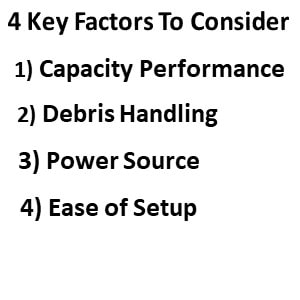
Not every pump is suited for every situation. When choosing the right one, consider these key factors:
-Capacity performance: A pump with a low gallons-per-hour (GPH) output will take forever to drain water - critical time that could lead to further damage. A high-capacity model, however, works much faster when every second counts.
-Debris handling: A clear water pump can easily clog if tasked with anything but clean water. Trash pumps or solids-handling submersible sump pumps, on the other hand, are specifically designed to handle debris, making them perfect for more challenging conditions.
-Power source: Electric pumps are efficient, but they rely on a steady power supply. If the electricity goes out during a storm, your pump will stop working. Gas-powered or battery-backup options work when the power goes out so potential damage is greatly reduced or eliminated.
-Ease of setup: Some pumps are ready to go with minimal effort: simply drop them in and you are done. Others require more time to set up, whether it is priming the pump, attaching hoses, or prepping fuel.
Ultimately, choosing the right pump is more than just about moving water; it is about minimizing damage, reducing long-term costs, and safeguarding your home and health.
Types of Water Pumps for Basement Flooding - Which One Do You Need?
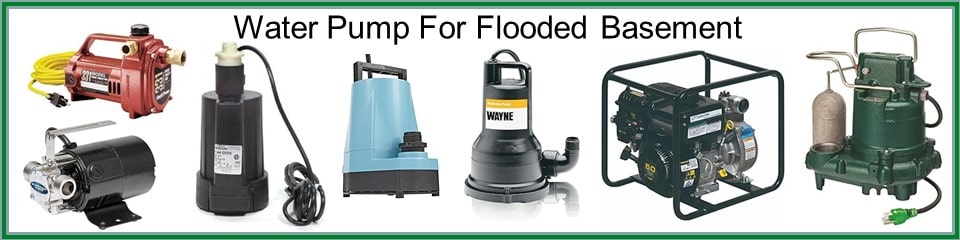
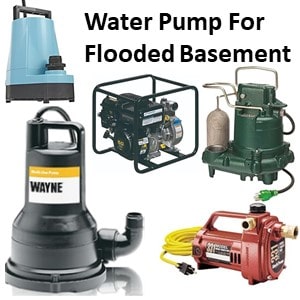
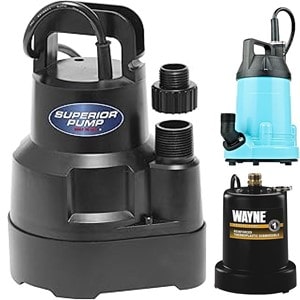
There are four main types of water pumps that can make basement flooding cleanup much easier: submersible utility pumps, transfer pumps, trash pumps, and permanent sump pumps. Each type is designed for different situations, from quick water removal to handling debris-filled floodwater. In this guide, we'll explain how each pump works, when to use it, and how to choose the right one for your specific basement flooding problem.
Submersible Utility Pumps
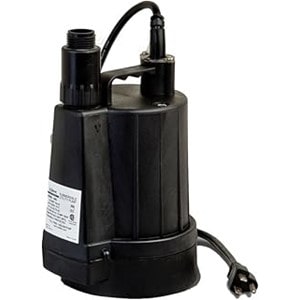
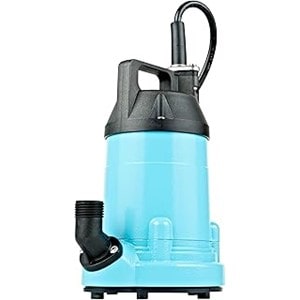
A submersible utility pump is known for its ability to remove standing water in your basement quickly. These pumps are portable, easy to use, and perfect when you need a fast solution after sudden flooding. They are designed to sit directly in water, making them ideal for draining or moving water from one location to another. These pumps require a discharge hose or pipe to direct the water where it is needed. Built with durable plastic and rubber components, submersible pumps are designed to withstand water exposure.
PAGE MENU
How Does A Submersible Utility Pump Work?
This pump is placed directly into the water. Once plugged in it pulls water through an intake at the bottom and pushes it out through a discharge hose. As the water level drops, the pump keeps working until it can no longer suck in water, often leaving just a thin layer behind. Models without a float switch must be turned off manually. Models with an automatic float switch, turn the pump off automatically when the water level drops, eliminating the need for constant monitoring
When To Use A Submersible Utility Pump
Ideal for:
- Clean to slightly dirty water.
- Situations where electricity is available.
- Flooding from a few inches to several feet
Pros:
- Quiet operation (motor underwater)
- Can pump water to very low levels (often ¼ inch or less)
- Compact and easy to store
Cons:
- Needs a power source
- Not suitable for large solids
- Continuous operation in shallow water can overheat the motor
Pro Tip:
- Use a wide discharge hose (1.25 inches or larger) to maximize flow and shorten pumping time.
Which Utility Pump Model Is Best?
- For high-volume, debris-heavy jobs: Wayne VIP50 and Zoeller LN44 work well.
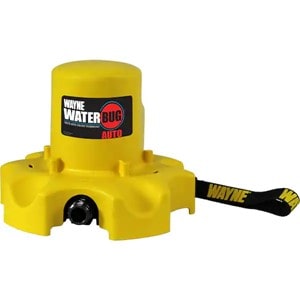
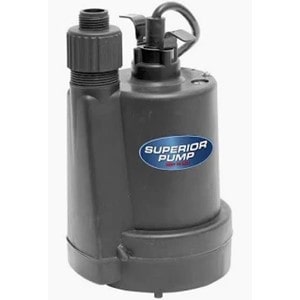
- For small residential use: The Wayne WaterBug, Superior Pump 91250 and Little Giant 5-APC are ideal due to their portability and lower cost.
Understanding the water volume, debris size, and specific job needs will help you choose the right model!.
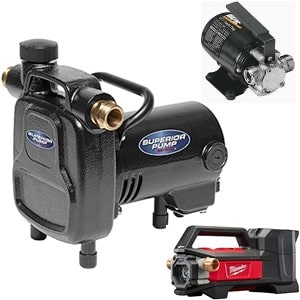
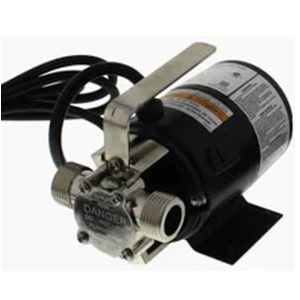
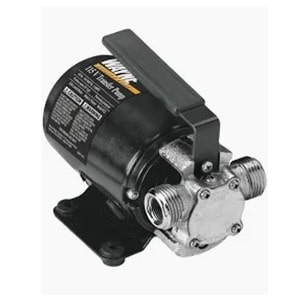
A transfer pump is designed to move liquid from one location to another. Unlike utility pumps, they are not designed to sit in standing water but instead work well for draining water tanks, hot tubs, or moving water from one container to another. They are lightweight, affordable, and handy for a variety of household water-moving jobs beyond just flooding.
PAGE MENU
How Does A Transfer Pump Work?
A transfer pump works like a water mover, pulling water from one spot and sending it through a hose to another location. It works by creating a pressure difference. It draws fluid in through an intake hose or pipe and expels it through an outlet hose or pipe. The intake hose must be positioned in the water source so that the fluid can be drawn in and pushed out to the desired location.
The pump operates using a rotating impeller, which creates a vacuum on the inlet side. This vacuum pulls the liquid into the pump, and the rotating parts then force the liquid out through the outlet side to its new destination.
When To Use A Transfer Pump
Ideal for:
- Moving water from one location to another.
- Draining hot tubs, pools, or water heaters.
- Minor flooding
Pros:
- Portable and versatile)
- Affordable
- Works well for controlled water transfer
Cons:
- Slower than submersible pumps for large volumes
- Does not handle debris well
- Some require priming before use
Which Transfer Pump Model Is Best?
- Best Pro/Contractor Electric: Liberty 331, Zoeller 311 and Little Giant 360S
- Best Homeowner Budget Electric: Wayne PC2, Superior 90040 and DC House PC1
- Best Gas Compact: Honda WX10 (premium) and Champion 100740 (budget).
- Best High-Flow Gas: Honda WB20XT / WB30XT and Tsurumi TE2-50HA
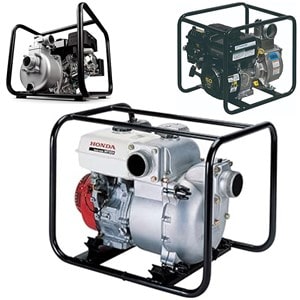
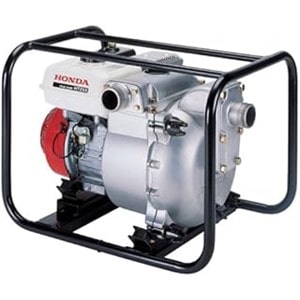
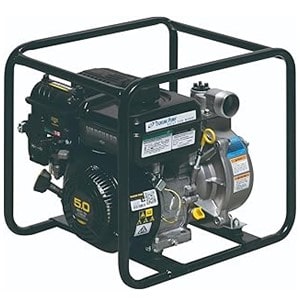
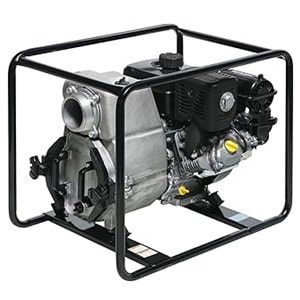
Trash pumps are the heavy-duty heroes of the pumping world, built to tackle the tough job of moving water mixed with solid debris. Unlike standard water pumps that can easily clog, it is the trash pumps open impeller that allows it to pump everything from rocks and mud to leaves and other debris; this makes them essential tools for disaster recovery, construction sites, and emergency flood cleanup. Most frequently they are gas powered. While they may be overkill for light water removal, they shine when conditions are messy and tough.
PAGE MENU
How Does A Trash Pump Work?
To operate properly, a trash pump must first be primed by filling it with water to create a vacuum, allowing the engine to start safely and run efficiently. Once primed, the engine powers a rotating shaft, which spins the impeller inside the pump. This motion generates centrifugal force, drawing in water with solid debris through a suction hose. The water then moves through the pump and is expelled through the discharge hose. As the pump continues to operate, debris can build up. Many models include a cleanout port for easy removal of larger debris that may clog the impeller housing over time.
Watch how this home owner used a trash pump to remove water from his flooded basement.>/p>
When To Use A Trash Pump
Ideal for:
- Deep flooding
- No electricity
- Water with mud, sand, or debris
Pros:
- Extremely high pumping capacity (thousands of GPH)
- Handles solids up to several inches in diameter
- Works without power grid
Cons:
- Heavy and loud
- Requires outdoor operation (fumes)
- Higher cost and more maintenance
Which Trash Pump Model Is Best?
- Best Pro/Contractor Electric: Liberty 331, Zoeller 311 and Little Giant 360S
- Best for durability and reliability: Honda WT20, Honda WT30, Honda WT40 series and Tsurumi EPT3-50HA
- Best homeowner budget choice: Champion 66520, Champion 100742 and DC House WP20
- Best heavy-duty contractor pumps: Tsurumi EPT3-100HA, Honda WT40x and Zoeller 1669-000
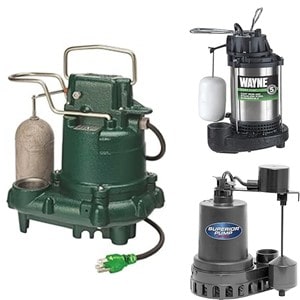
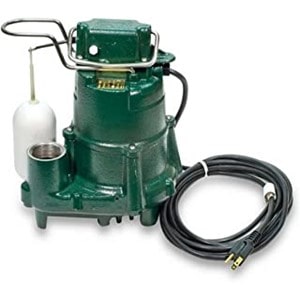
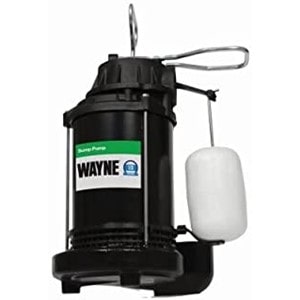
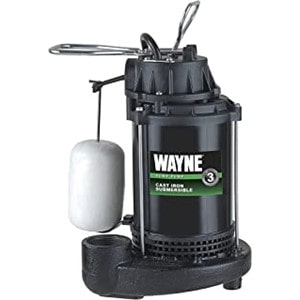
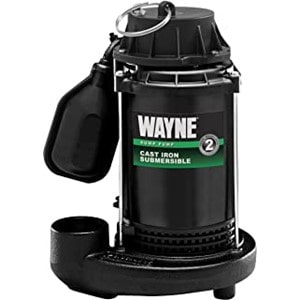
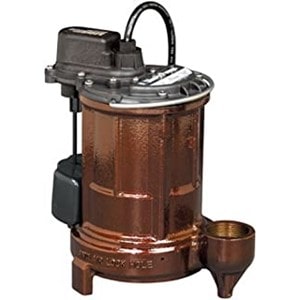
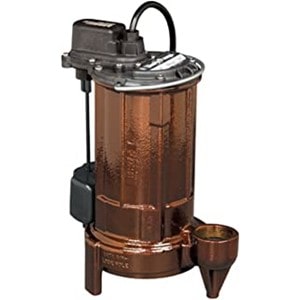
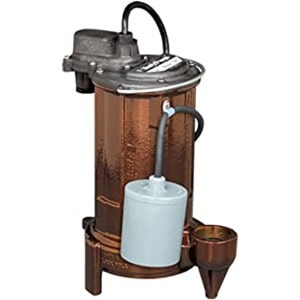
A sump pump system is a permanent solution designed to protect building lower levels, most often the basement, from foundation flooding. A sump pump system consists of perimeter underground drain tiles that direct water into a pit. The sump pump pumps the water through a discharge pipe that carries the water away from the house. This type of pump keeps the basement dry. It provides peace of mind and year-round protection, making it an essential investment for homeowners in flood-prone areas.
The pump housing is made of materials such as: cast iron, stainless steel, zinc, aluminum and thermoplastic. Cast iron dissipates heat best and is frequently used for one-half horse power or greater motors. Thermoplastic traps heat so is used for sump pumps with lesser horse power. A sump pump consists of a motor, impeller, float switch and discharge port. Pumps without a float switch require manual monitoring.
PAGE MENU
How Does A Sump Pump Work?
A sump pump sits in a sump pit located at the lowest point of your basement. Groundwater naturally collects from the perimeter drain tile and flows into the sump pit. As water enters the pit and rises its height is monitored by a float switch.
When the water level in the pit rises to a set point, the float switch closes electrical contacts, allowing current to flow and power the pump. The motor then spins the impeller, creating suction that pushes the water through the discharge pipe and away from the home. Once the water level drops, the pump automatically shuts off, ensuring efficient operation. To prevent water from flowing back into the pit when the pump stops, a check valve in the discharge pipe, equipped with a flapper or gate, prevents backflow.
This system provides an efficient, permanent solution to basement water problems.
Battery Backup and Water Powered sump pumps are used to supplement electric sump pumps in case the electric power is out.
When To Use A Sump Pump
Ideal for:
- Homes with frequent water intrusion
- Ongoing flood prevention
- Integration with battery backup
Pros:
- Automatic protection
- Reliable for ongoing use
- Can be combined with alarms for early warning
Cons:
- Not portable
- Will not handle sudden large-volume flooding unless already in place
- Cannot handle debris unless its impeller makes it an effluent pump
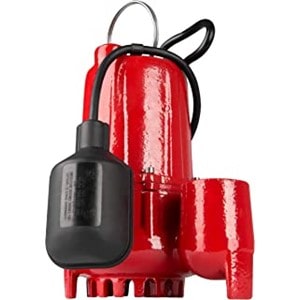
- Best homeowner budget choice: Superior Pump 92341 (1/3 HP) and Red Lion RL-SC33V (1/3 HP); The Superior is light and cheap but reliable for moderate water. Red Lion gives you a cast-iron pump at a budget price.
- Best for higher vertical discharge height and long discharge runs: Wayne CDU1000 can push water to 40 foot head.
- Best compact pump for small pits: Liberty 257 (1/3 HP) and Little Giant 6-CIA (1/3 HP); both require less than 9 inch diameter. .
- Best mid-range pumps with a balance of performance and price): Liberty 287 amd Wayne CDU800; both one-half horse power.
Do you wonder which water pump is best for a specific problem?
Here are some scenarios matched to a pump type:
:
- Shallow puddles with power: Submersible utility pump
- Moderate flooding with power: High-capacity submersible utility pump
- Severe flooding with debris and no power Gas-powered trash pump
- Recurring seepage: Permanent sump pump with battery backup
- Minor, occasional floods: Portable electric submersible utility pump
Real-World Flooding Scenarios: Matching Pumps To Problems
Scenario 1 - Sudden Heavy Rainstorm with Power On
Homeowner: Lisa in Columbus, Ohio
The Situation: A late-spring thunderstorm dumped more than two inches of rain in just under an hour. The sump pump was working, but it could not keep up. Water began pooling across the basement floor, reaching about 4 inches deep in the lowest spots. Power was still on, so she had options.
The Solution: She quickly set up a Wayne VIP50 submersible utility pump she had stored in her garage. With a short, 1.5-inch discharge hose leading directly to the backyard, she was able to remove the standing water in just over an hour.
Lesson Learned: Even with a sump pump, having a portable utility pump as backup can save the day when storms overwhelm the system.
Scenario 2 - Power Outage During Flash Flood
Homeowner: Mike in Cedar Rapids, Iowa
The Situation: A flash flood warning became reality when water poured into the basement at night. The sump pump kicked in at first, but a lightning strike knocked out the neighborhood power grid within minutes.
The Solution: Mike had invested in a Honda WT20 gas-powered trash pump after a similar incident years earlier. He set the pump up outside, ran the intake hose through a basement window, and started pumping. Even with leaves and small sticks in the water, the trash pump kept going. The water level dropped from 3 feet to 6 inches in about two hours..
Lesson Learned: If your area experiences severe storms, having a gas pump (and fuel on hand) is the best way to guarantee pumping when the grid fails.
Scenario 3 - Burst Washing Machine Hose
Homeowner: Claire in Nashville, Tennessee
The Situation: Claire came home from work to find her laundry room and adjacent finished basement partially flooded from a burst washing machine hose. The water was clean, but it was about 1.5 inches deep and still spreading.
The Solution: She used a Superior Pump 91250 submersible utility pump to quickly move water to a floor drain in the utility room. Because the water was shallow, she placed the pump on a baking sheet to keep it steady and help it run down to a quarter inch before switching to towels.
Lesson Learned: Even small-capacity pumps can prevent damage if you catch flooding early and act fast. She also decided it is best to install a water leak detector part number H5059 from GoveeLife in the laundry room so she can be alerted remotely if issues like that happen again..
Scenario 4 - Chronic Seepage in Rainy Season
Homeowner: David in Portland, Oregon
The Situation: The 1920s home David lives in had a stone foundation that seeped water during heavy rains. The water never came in suddenly, but it would accumulate over days and create a persistent musty smell.
The Solution: He had a drainage system put in with a sump pit and a Zoeller M53 sump pump with a battery backup system, known as a combination sump pump system Zoeller ProPak 53. The entire foundation was waterproofed as well. Now, the water goes into the pit and is pumped out automatically so the musty smell is gone.
Lesson Learned: Not all flooding is dramatic. Sometimes prevention is about taking care of slow leaks so they do not reoccur.
Scenario 5 - Melting Snow Meets Frozen Ground
Homeowner: Erin in Minneapolis, Minnesota
The Situation: An unusually warm March day melted several feet of snow in just 48 hours. The ground was still frozen, so the water flowed straight into Erin's basement window wells and down to the floor.
The Solution: She rented a high-capacity electric submersible pump from a local hardware store and used it continuously for 36 hours to keep water levels manageable until the melt slowed.
Lesson Learned: Even if you do not own a high-end pump, rental options can save your home in emergencies, as long as you act quickly before stores run out.
These scenarios highlight the critical importance of understanding and preparing for potential flooding situations. Quick, decisive action can significantly reduce damage and help protect both property and lives. Being proactive in your response is key to minimizing the long-term effects of flooding.
Top Recommended Water Pumps List For Flooded Basements
When your basement is taking on water, the last thing you want is a pump that fails when you need it most. With so many types available, from utility and transfer pumps to sump and trash pumps, it is easy to feel overwhelmed. To make things simpler, we narrow down our recommendations to pumps from trusted, well-known brands. These models consistently deliver durability, reliability, and peace of mind. While they may not always be the cheapest option, investing in a quality pump often saves you money (and headaches) in the long run by avoiding breakdowns and costly water damage. That is why we recommend pumps from brands like Zoeller, Wayne, Liberty Pumps, Superior Pump, Little Giant, and Tsurumi names that homeowners and professionals alike trust.
Quick Look At Trusted Brands
Zoeller Widely respected for reliability and long-lasting switch technology, Zoeller pumps are a favorite for homeowners who want a system that will run for years with minimal issues.
Wayne A great balance of performance, affordability, and wide availability; Wayne pumps are easy to find and install, making them popular for DIY homeowners.
Liberty Pumps Known for power and efficiency, Liberty pumps excel in heavy flooding situations and are built to handle demanding workloads.
Superior Pump An affordable yet dependable option, Superior offers pumps that deliver solid performance for budget-conscious homeowners without sacrificing too much durability.
Little Giant Trusted for both residential and light commercial use, Little Giant is recognized for versatility and strong engineering, especially in utility and transfer pump applications..
Tsurumi Renowned worldwide for industrial-grade pumps, Tsurumi also offers residential models with exceptional durability. Their pumps are engineered with features like heavy-duty seals and high-performance impellers, making them ideal for homeowners who want commercial-level reliability in their basement or yard.
Understanding a little bit about each brand gives a window into the confidence homeowners place in them; however there are still many models to choose from. To make things easier, we have grouped the best water pump models by type. Use these lists as a guide to quickly find the pump that fits your basement flooding needs.
Best Utility Pumps List
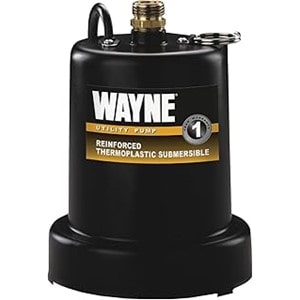
1. Wayne VIP30: HP: 1/3 HP; Flow Rate: 2,600 GPH at 0 foot lift; Power Cord Length: 8 feet; Automatic; Reinforced thermoplastic; Warranty: 1-year limited; Minimum Depth to Start: 2-5/8 inches; Max Discharge Head: 10 feet; Discharge Size: 1-1/4 inch NPT; Vortex Impeller; Solids Handling: 1/2 inch solids; Pump Down to: 1/8 inch of water; Price: Range $90- $110
2. Wayne 56517 TSC130: HP: 1/4 HP; Flow Rate: 1,250 GPH at 0 foot lift; Power Cord Length: 8 feet; Automatic; Reinforced thermoplastic; Warranty: 1-year limited; Minimum Depth to Start: 2-5/8 inches; Max Discharge Head: 25 feet; Discharge Size: 3/4 inch NPT; Solids Handling: 1/4 inch solids; Pumps down to: 1/8 inch of water: Price: Range $69- $97
3. Wayne WaterBug Auto: HP: 1/6 HP; Flow Rate: 1,200 GPH at 0 foot lift; Power Cord Length: 25 feet; Automatic; Warranty: 1-year limited; Discharge Size: 1-1/4 inch NPT; Solids Handling: 1/16 inch solids; Pump Down to 1/8 inch water; Price: Range: $100 - $125
4. Zoeller LM44: HP: 1/2 HP; Flow Rate: 3,000 GPH at 0 foot lift; Power Cord Length: 10 feet; Automatic; Warranty: 3-year limited; Discharge Size: 1-1/4 inch NPT; Solids Handling: 1/2 inch solids; Pump Down to 1/4 inch water; Price: Range: $200 - $250
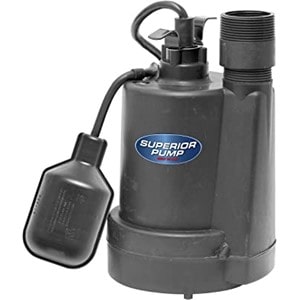
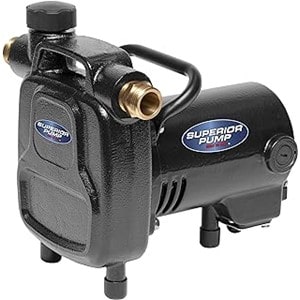
5. Superior Pump 91250: HP: 1/4 HP; Flow Rate: 1,800 GPH at 0 foot lift; Power Cord Length: 10 feet; Manual: 1-year limited Warranty; Discharge Size: 1-1/4 inch NPT; Solids Handling: 1/8 inch solids; Pump Down to 1/8 inch water; Price: Range: $70 - $90
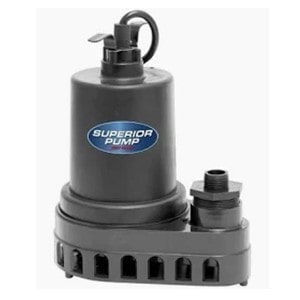
6. Superior Pump 91014: HP: 1/4 HP; Flow Rate: 2,220 GPH at 0 foot lift; Power Cord Length: 8 feet; Lifts water up to 25 feet of vertical height; Tough thermoplastic construction; Manual: 1-year limited Warranty; Discharge Size: 1-1/4 inch NPT; Solids Handling: 1/8 inch solids; Pump Down to 1/8 inch water; Includes 3/4 inch garden hose adapter. Price: Range: $70 - $80
7. Superior Pump 91570: HP: 1/2 HP; Flow Rate: 3,300 GPH at 0 foot lift; Power Cord Length: 10 feet; Lft water up to 25 feet of vertical height; Tough thermoplastic construction; Impeller: Stainless Steel; Manual: 3-year limited Warranty; Discharge Size: 1-1/2 inch NPT; Solids Handling: 1/8 inch solids; Pump Down to 1/8 inch water; Includes 3/4 inch garden hose adapter. Price: Range: $86 - $119
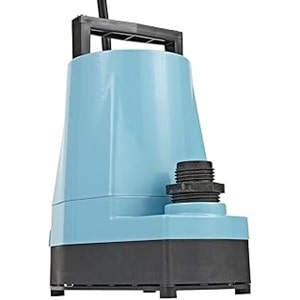
8. Little Giant 5-APC-LL: Little Giant 5-APC-LL Utility Pump; HP: 1/6 HP; Flow Rate: 1,500 GPH at 1 foot lift; Aluminum Housing; Power Cord Length: 18 feet; Automatic: Diaphragm Switch Designed for continuous duty applications; 26-foot maximum head (shutoff); 1-year limited Warranty; Discharge Size: 1 inch NPT; Includes 3/4-inch garden hose adapter; Removable inlet screen allows easy cleaning; Pump Down to 1/8 inch water; Price: Range: $90 - $120
9. Little Giant 5-MSP: HP: 1/6 HP; Flow Rate: 1,500 GPH at 0 foot lift; Power Cord Length 10 feet; Maximum Head: 26.3 feet; Impeller Material, Nylon; Manual: 1-year limited Warranty; Discharge Size: 1 inch NPT; Solids Handling: 0.13 inch; Pump Down to 1/16 inch water; Price: Range: $124 - $146
10. Little Giant 6-MSP: HP: 1/3 HP; Flow Rate: 2,130 GPH at 0 foot lift; Power Cord Length 10 feet; Maximum Head: 26.3 feet; Housing: Aluminum; Impeller Material, Plastic; Manual: 3-year limited Warranty; Discharge Size: 1-1/4rd inch NPT; Solids Handling: 0.13 inch; Pump Down to 1/4 inch water; Price: Range: $108 - $134
11. Liberty Pumps 260: HP: 1/6 HP; Flow Rate: 1,020 GPH at 0 foot lift; Power Cord Length 25feet; Maximum Head: 25 feet; Housing:: Thermoplastic Impeller: Engineered thermoplastic. Manual: 3-year limited Warranty; Discharge Size: 3/4 inch NPT; Solids Handling: 0.13 inch; Pump Down to 1/8 inch water; Price: Range: $108 - $134
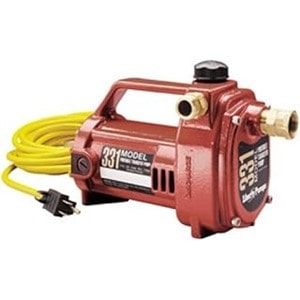
1. Liberty 331: HP: 1/2 HP; Flow Rate: Up to 23 GPM at 5 feet of head; Discharge Head: 105 feet; Suction Lift: 15 feet; Connections: 3/4 inch brass garden hose connectors; Dimensions: 9-3/4 inch L x 4-1/2 inch W x 7 inch H; Weight: Approximately 10.5 to 11 pounds; Housing: One-piece cast aluminum pump and motor housing; Impeller: Glass-reinforced thermoplastic; Power Cord: 20 feet; Swiitch: Convenient On/Off switch : Price: Range $270 - $304
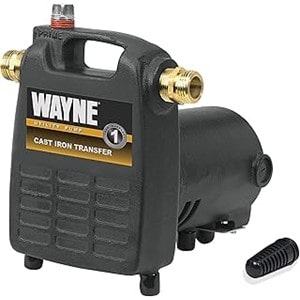
5. Wayne PC4: HP: 1/2 HP; Flow Rate: 1,450 GPH; non-submersible; Cord Length: 8 feet; portable electric pump; Warranty: 1 year; Discharge Size: 3/4 inch garden hose thread; maximum discharge head of up to 80-120 feet. It operates on 120V, 60Hz power Housing Material: Cast Iron; Solids Handling: N/A (clean water only); Pumps down To 1/8 inch; Price Range: $145 - $179
7. DC House PC1: HP: 1/8 HP; Flow Rate: 330 GPH; Cord Length: 6 feet; Manual; Warranty: 90 days; Discharge Size: 3/4 inch garden hose thread; Solids Handling: N/A (clean water only); Pump Down To:1/8 inch; Thermoplastic ; Price Range: $45 - $60
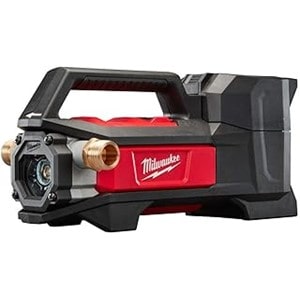
8. Milwaukee 2771-20 M18: HP: 1/4 HP; Flow Rate: 480 GPH; Voltage: 18 V which means it si a a battery-powered cordless water transfer pump designed to work with the Milwaukee M18 battery system. It is powered by REDLITHIUM battery packs,; Suction Lift: Up to 18 feet; Head Pressure: Up to 75 feet; Constructed from a combination of marine aluminum (for the housing) and nitrile rubber/reinforced nylon/plastic for the impeller and body components; Designed with flexible impeller; Makes a louder noise if runs dry for more than 10 seconds; Warranty: 5 years; Discharge Size: 3/4 inch garden hose thread; Solids Handling: N/A (clean water only); Price Range: $229 - $250
1. Honda WT20: HP: 4.8; Engine: Honda GX; Flow Rate: 187 GPM; Discharge Head: 98 feet; Discharge Size: 2 inches; Rugged cast iron volute with Stainless Wear Plate; Silicon-carbide seal: Priming time 70 sec. seconds with suction head of 16.4 feet; Warranty: 3 years for residential use and 1 year for commercial use. Price: Range $1,299 - $1,380
2. Honda WT30: HP: 7.9; Engine: Honda GX270; Flow Rate: 319 GPM; Discharge Head: 82 feet; Discharge Size: 3 inches; Rugged cast iron volute; Conical Cast Iron Impeller; Silicon-carbide seal: Priming time 100 sec. seconds with suction head of 16.4 feet; Warranty: 3 years for residential use and 1 year for commercial use. Price: $1,599
3. Tsurumi HS2.4S HP:1/2 HP ( 0.5); Flow Rate: 53 GPM (3180 GPH; maximum suction lift is 20 feet; Discharge Size: 2 inches; Cast-iron housing Submersible with Agitator semi-vortex, rubber impeller, a 2-inch NPT male discharge, and can achieve a maximum flow of 53 GPM and a total head lift of 39 feet; 20-foot power cord; Built-in shaft-mounted agitator to suspend solids for pumping muddy water, sand, and debris Warranty: 2 years. Price Range: $373 - 457.
4. Tsurumi TE3-50V HP: 4; Honda GX120 engine, offering a maximum flow rate of 137 GPM (gallons per minute) or 8,220 GPH (gallons per hour) and a maximum head of 115 feet (or 50 PSI); Discharge Size: 2 inches; Capable of handling solids up to 3/8 inches; Cast iron impeller and volute casing; Rolled steel frame; Silicon Carbide mechanical seal; Rubber mounts on the pump and frame reduce vibration and strain; Oil sensor automatically shuts down the pump if the oil level is low; Warranty: 2 years. Price Range: $460 - $495.
5. Tsurumi EPT3-100V HP 14 HP Engine: Vanguard 400, delivering a maximum flow rate: 264 GPM (28,560 GP) Handles solids up to 3/8 inch; High-chrome impeller, Cast iron volute, Stainless steel wear plate; Silicon Carbide mechanical seal Heavy-duty steel frame with vibration isolators; Oil Alert System for engine protection; Maximum head: 95 feet; Discharge Size: 4 inches; Includes a clean-out door for easy access to the impeller and for clearing blockages without removing the suction hose; Warranty: 2 years. Price Range: $3570 - 3600.
6. Red Lion 6RLAG-2LST: HP: 6; 208cc, 4-stroke OHV engine Flow Rate: 150 GPM; Semi-trash: Solids Handling: 1/2 inch: Self-priming; Total head lift of 92 feet. Lightweight aluminum outer casing with a heavy-duty roll frame; Cast iron semi-open impeller Built-in check valve; Discharge Size: 2 inches; Warranty. 1 Year. Price Range: $373 - $399
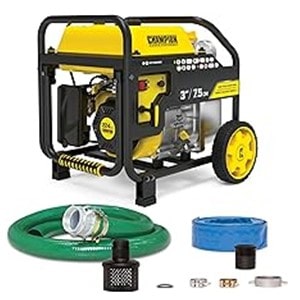
7. Champion 100743 HP: 6.5; 224cc Champion OHV engine; Flow Rate: 264 GPM; Maximum head: 95 feet;; Discharge Size: 3 inches; Maximum total head of 92 feet; 26-foot suction head, Solids handling: 0.75 inches Package includes 12-foot suction hose with filter and 25-foot discharge hose; Engine Oil Capacity: 0.5 quarts Wheel Kit with never-flat tires; Steel frame with a wrap-around design for protection; Aluminum pump housing with a cast iron volute and impeller; Warranty: 2 years. Price Range: $399 - $460.
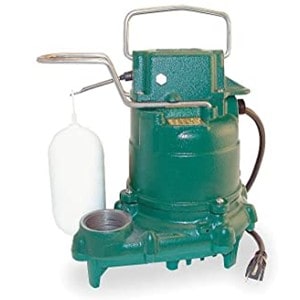
1. Zoeller M63: HP: 1/3 HP (0.30 HP); Automatic; Voltage: 115 Volts Discharge: 1-1/2inch; Maximum Flow: 43 GPM (Gallons Per Minute) at a 5-foot head; Maximum Head: 19.25 feet; Impeller: Cast Iron Vortex Impeller; Motor Housing: Cast Iron; Base & Switch Case: Cast Iron; Switch Type: 2-Pole Snap Action Vertical Switch; Cord Length: 10 feet (3.1 m); LED Plug; switch tested to 3 million cycles; Warranty: 5-Year Limited; Price: Range $310 - $330
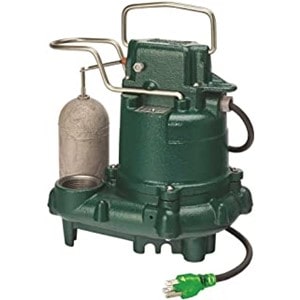
2. Zoeller M53: HP: 1/3 HP (0.30 HP); Automatic; Voltage: 115 Volts Discharge: 1-1/2inch; Maximum Flow: 43 GPM (Gallons Per Minute) at a 5-foot head; Maximum Head: 19.25 feet; Impeller: Engineered Thermoplastic Vortex Impeller; Motor Housing: Thermoplastic; Base; Cast Iron; Switch Case: Switch Type: 2-Pole Snap Action Vertical Switch; Cord Length: 9 feet (3.1 m); LED Plug; switch tested to 1 million cycles; Warranty: 3-Year Limited; Price: Range $210 - $230
3. Zoeller M98 HP: 1/2 HP (0.50 HP); Automatic; Voltage: 115 Volts Discharge: 1-1/2inch; Maximum Flow: 72 GPM (Gallons Per Minute) at a 5-foot head; Maximum Head: 23 feet; Impeller: Engineered Thermoplastic Vortex Impeller; Motor Housing: Thermoplastic; Base; Cast Iron; Switch Case: Switch Type: 2-Pole Snap Action Vertical Switch; Cord Length: 15 feet; LED Plug; switch tested to 1 million cycles; Warranty: 3-Year Limited; Price: Range $332 - $249
4. Wayne CDU1000 HP: 1 HP (1.0 HP); Automatic; Voltage: 120 Volts Discharge: 1-1/2inch; Maximum Flow: 85 GPM (Gallons Per Minute) at a 5-foot head; Maximum Head: 25 feet; Top Suction Motor Housing: Stainless Steel; Base; Cast Iron; Switch Type: 2-Pole Snap Action Vertical Switch; Cord Length: 8 feet; switch tested to 1 million cycles; Warranty: 6-Year Limited; Price: Range $169 - $180
5. Wayne CDU800 HP: 1/2 HP (0.50 HP); Automatic; Voltage: 120 Volts; Discharge: 1-1/2inch; Maximum Flow: 75 GPM (Gallons Per Minute) at a 5-foot head; Maximum Head: 20 feet; Top Suction- no solids handling; Motor Housing: Stainless Steel; Base; Cast Iron; Switch Type: 2-Pole Snap Action Vertical Switch; Cord Length: 8 feet; Switch tested to 1 million cycles; Warranty: 3-Year Limited; Price: Range $165 - $225
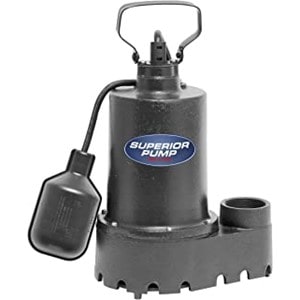
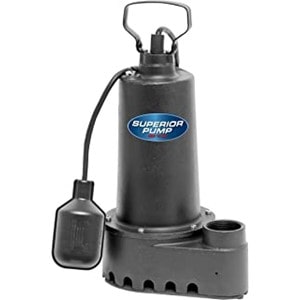
6. Superior Pump 92341 HP: 1/3 HP (0.30 HP); Automatic; Voltage: 120 Volts; Discharge: 1-1/2inch; Maximum Flow: 46 GPM (Gallons Per Minute) at a 5-foot head; Maximum Head: 25 feet; Side and Bottom Suction- to handle 3/8 inch solids; Motor Housing: Cast Iron; Switch Type: Vertical Switch; Cord Length: 10 feet; Warranty: 3-Year Limited; Price: Range $145 - $179
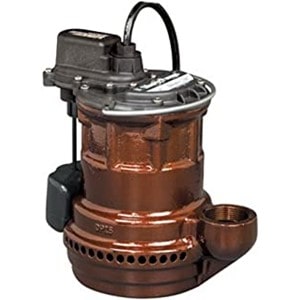
7.Liberty 257 HP: 1/3 HP (0.30 HP); Automatic; Voltage: 115 Volts; Discharge: 1-1/2inch; Maximum Flow: 45 GPM (Gallons Per Minute) at a 5-foot head; Maximum Head: 23 feet; Vortex Impeller Solids handling up to 1/2 inch; Motor Housing: Cast Iron; UNI-Body; Switch Type: Vertical Magnetic Switch;; Cord Length: 10 feet; Warranty: 3-Year Limited; Price: Range $198 - $225
8.Liberty 287 HP: 1/2 HP (0.50 HP); Automatic; Voltage: 115 Volts; Discharge: 1-1/2inch; Maximum Flow: 62 GPM (Gallons Per Minute) at a 5-foot head; Maximum Head: 47 feet; Vortex Impeller Solids handling up to 3/4 inch; Motor Housing: Cast Iron; Switch Type: Vertical Magnetic Switch;; Cord Length: 10 feet; Warranty: 3-Year Limited; Price: Range $300 - $330
9. Little Giant 6-CIA HP: 1/3 HP (0.30 HP); Automatic; Voltage: 115 Volts; Discharge: 1-1/2inch; Maximum Flow: 46 GPM (Gallons Per Minute) at a 5-foot head; Maximum Head: 18 feet; Vortex Impeller Solids handling up to 1/2 inch; Motor Housing: Cast Iron; Switch Type: Diaphragm Switch;; Cord Length: 10 feet; Warranty: 3-Year Limited; Price: Range $174 - $190
10. Red Lion RL-SC33V HP: 1/3 HP (0.30 HP); Automatic; Voltage: 115 Volts; Discharge: 1-1/2inch; Maximum Flow: 50 GPM (Gallons Per Minute) at a 5-foot head; Maximum Head: 24 feet; Vortex Impeller Solids handling up to 3/8 inch; Motor Housing, Base, Impeller: Cast Iron; Switch Type: Vertical Switch;; Cord Length: 10 feet; Warranty: 3-Year Limited; Price: Range $171 - $190
a. Avoid Shock Risk: Always plug electric pumps into GFCI outlets to reduce shock risk.
b. Avoid Carbon Monoxide Poisoning: Never run a gas-powered pump indoors (carbon monoxide hazard).
c. Avoid Electrocution: Do not touch standing water if electrical outlets or cords are submerged.
d. Avoid Contamination: Wear waterproof boots and gloves to avoid contact with contaminated water.
2. Remove Water As Fast As Possible.
a. Maximize Flow: Use the shortest, widest discharge hose possible - this maximizes flow..
b. Maximize Capacity: Keep pump intake clear of debris to maintain capacity..
c. Keep Hose Straight: If pumping large volumes, check hose placement often to avoid backflow.
d. Match Hose Diameter To Water Pumping Job: Avoid using long, narrow garden hoses for big jobs - they choke flow rates.
3. Look For Long-Term Solutions: Basement Flood Prevention Is Best.
a. Be Proactive: The best time to think about basement flooding is before it happens again.
b. Install Double Protection: Install a sump pump and a battery backup sump pump. A battery backup pump can handle primary pump overflow and take over when the primary pump fails because of a bad float switch or lack of electrical power
c. Clean Gutters And Downspouts: Keep gutters and downspouts clear and pointed away from the foundation; Water seepage around the foundation runs into the sump pit and causes more water pumping.
d. Slope Soil Away From The House: Grade soil so water flows away from your home.
e. Use A Water Alarm and Wi-Fii Notification: Consider installing a water leak alarm for early warnings as well as a pump that is Wi-Fi enabled.
1. What is the fastest way to pump water out of a flooded basement?
The fastest method depends on your situation. If you have electricity and the water is relatively clean, a high-capacity submersible utility pump can remove thousands of gallons per hour. If the power is out or the water contains debris, a gas-powered trash pump will work faster and won't clog. Always use the widest discharge hose possible to speed up pumping.
2. What kind of pump should I use for dirty flood water?
For water with mud, sand, leaves, or other debris, choose a trash pump. These are designed with larger impellers that allow solids to pass through without clogging. Electric trash pumps exist, but for heavy flooding without power, a gas-powered model is the best choice.
3. Can I use a garden hose with a submersible pump?
Yes, but it is not ideal. A garden hose's small diameter will drastically reduce your pump's flow rate. For faster water removal, use at least a 1.25-inch and a 2-inch discharge hose is even better. The larger the hose, the more water you can move in less time.
4. How do I pump water out of a basement without power?
If the power is out, you will need either:
:
- A gas-powered trash pump (fastest and best for debris-filled water).
- A battery backup sump pump (good for lower volumes, shorter run times).
- A generator to run an electric pump
Never run gas-powered pumps indoors - keep them outside with intake and discharge hoses running to and from the basement.
5. Should I pump my basement all at once if I have a lot of water?
If flooding is severe and water levels are several feet deep, it's safer to pump gradually. Rapidly removing water can cause hydrostatic pressure on foundation walls, which may lead to cracking or structural damage. For minor to moderate flooding, continuous pumping is fine.
6. What is the difference between a sump pump and a utility pump?
A sump pump is permanently installed in a pit and automatically turns on when water levels rise - it is designed for prevention. A utility pump is portable, can be placed anywhere water has collected, and is best for emergency water removal.
7. Can I rent a pump for a flooded basement?
Yes, most home improvement stores and equipment rental centers offer daily rentals for submersible utility pumps, trash pumps, and hoses. This is a good option if you do not face frequent flooding - but keep in mind, during regional floods, rental pumps may sell out quickly.
8. How soon should I start drying my basement after pumping? i
Immediately. Even if the floor feels dry, moisture can linger in walls, insulation, and subfloors. Use fans and dehumidifiers within hours of pumping to prevent mold growth.
Flooded basements are stressful, but having the right pump and knowing how to use it makes a huge difference. Whether you choose a submersible utility pump for emergencies, a gas trash pump for no-power scenarios, or a permanent sump system for prevention, the key is to match the tool to the problem.
Do not wait until water is running across your basement floor to start researching. Keep a pump on hand, hoses ready, and you will be prepared to act in minutes instead of hours.
Quick Shop Water Pumps For Flooded Basement By Brand
As an Amazon Associate we earn from qualifying purchases. Your purchase price is the same as if you shop directly on Amazon.
The price at time of publish is included to give you an idea of what the price is; however it is subject to change.
THE HELPFUL PUMP PLACE where you can become an educated shopper. Review - Compare - Shop And Find The Best Pumps Selection For Your Water Pumping Needs.