Take the Sump Pump Quiz to Find the Best Sump Pump for Your Home
Answer 6 quick questions to get a personalized sump pump recommendation based on your basement size, water conditions, and reliability needs.
(Click PAGE MENU To See Topics Covered On This Page. Scroll down the page to see all Menu Topic Information. Click the X to close the page menu) PAGE MENU
Click the Table Of Contents button to Hide it. Click it again to see it.
Question 3: Is Your Pump Running Frequently Even When It Does Not Rain Or Only During Heavy Rain Storms?
If your sump pump runs frequently even when it is not raining, your home may be located in a high water table area. In these situations, choosing the right float switch is important to prevent short cycling and premature motor failure.
Choosing a sump pump with a longer distance between the ON and OFF points will cause the pump to run less often. This helps extend sump pump life, reduce wear on the motor, and improve performance in high water table conditions.
- Vertical float switches usually have a short ON/OFF range of about 4-6 inches, which can cause the pump to cycle more frequently.
- Tether float switches have a larger adjustable range, typically around 12-16 inches, allowing the pump to run less often.
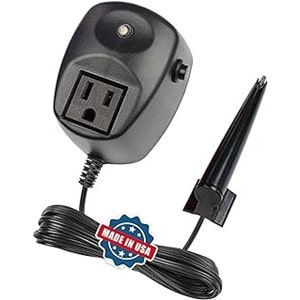
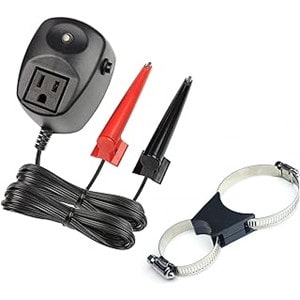
- Some electronic float switch controllers allow you to customize both the ON and OFF points anywhere from ½ inch to 10 feet for maximum control. This type of float switch is really good for high water table areas.
Question 4: How Often And Long Does The Pump Run During Heavy Rainstorms?
It is important to know how often and long your sump pump runs during heavy rainstorms because this gives you an idea if your current pump is capable of handling more or if it barely keeps up and more horse power would be better. This is what we call properly sized pump for the job.
How to Calculate Your Sump Pump Size
One of the best ways to determine whether your sump pump is properly sized is to measure how often it runs during the heaviest part of a rainstorm.
4 steps To Calculate Your Sump Pump Size
Step 1: Identify Your Float Switch Type
The amount of water removed during each pump cycle depends largely on the sump pit diameter, the distance between the float switch ON OFF point and the pump installation height.
Typical water removed per cycle in an 18-inch sump pit is approximately:
- Tether float switch: 7-12 gallons per cycle
- Vertical magnetic reed float switch: about 4 gallons per cycle.
- Vertical 2-pole snap-action float switch: 4-6 gallons per cycle
Step 2: Count Pump Cycles During Heavy Rain
During the heaviest portion of a storm, count how many times the sump pump turns on in one minute.
Step 3: Estimate Water Volume
Multiply the gallons removed per cycle by the number of pump cycles per minute.
For Example:
- A tether-float pump removing 10 gallons per cycle
- Running 6 times per minute
Would be removing approximately: 10 × 6 = 60 gallons per minute
PRO Tip: If the pump runs continuously or very frequently during storms, a cast iron sump pump is often recommended because cast iron dissipates motor heat better during extended run times.
Step 4: Compare Your Gallons Calculated To Horse Power GPM Output
Horsepower directly affects how much water a sump pump can remove per minute (GPM). In general, higher horsepower sump pumps move more water, especially during heavy rain, groundwater intrusion, or flooding conditions.
Most residential sump pumps discharge water through a 1-1/2-inch pipe with approximately 8-12 feet of vertical lift. At around 10 feet of total dynamic head (TDH), the average flow rates are:
- 1/4 HP sump pump: 15-25 GPM
- 1/3 HP sump pump: 20-35 GPM
- 1/2 HP sump pump: 35-55 GPM
- 3/4 HP sump pump: 45-65 GPM
- 1 HP sump pump: 65-90 GPM
As vertical lift increases, sump pump performance decreases because the pump must work harder to push water upward through the discharge pipe. This reduction in flow rate is commonly referred to as head pressure or total dynamic head.
For example, a sump pump rated at 60 GPM at 0 feet of head height may only pump 40-45 GPM at 10 feet of vertical lift.
Choosing the correct sump pump horsepower helps ensure the system can keep up with heavy water intrusion and helps reduce the risk of basement flooding
Question 5: Does Your Groundwater Contain Calcium Carbonate or Hard Water Minerals?
If your groundwater contains high levels of calcium carbonate or hard water minerals, avoid using a vertical reed float switch unless you are willing to perform regular maintenance.
Mineral deposits can build up on the float rod and upper connection points over time. This buildup may cause the float switch to stick, cling, or fail to activate properly. To keep the switch operating correctly, the float rod and connections should be cleaned periodically with a vinegar solution to dissolve mineral contamination.
Tether float switches and vertical snap-action float switches are generally not affected by groundwater mineral buildup and usually require less maintenance in hard water conditions.
Recommended Sump Pump Solutions to Help You Find the Best Sump Pump for Your Basement
The six questions above are designed to help you identify the sump pump features that matter most for your basement.
Every home has different groundwater conditions, flooding risks, sump pit configurations, and maintenance requirements. Because of these differences, there is no single sump pump that is best for every situation.
The recommendations below match specific sump pump features to common homeowner needs. Whether you are looking for maximum reliability, less motor short cycling, protection from groundwater mineral buildup, or the right horsepower, these recommendations will help you find the best sump pump for your basement and protect your home from water damage.
Most Reliable Sump Pump Float Switches
Float switch failure is one of the most common causes of sump pump problems. Choosing a reliable float switch greatly reduces the risk of basement flooding and extends sump pump life. This is why we recommend the following two float switches: 1) Zoeller Upgraded Vertical Snap-Action Float Switch and 2) HydroCheck HC6000 Switch Controller.
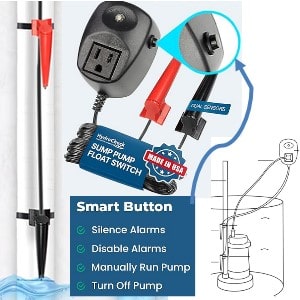
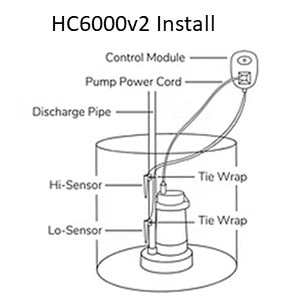
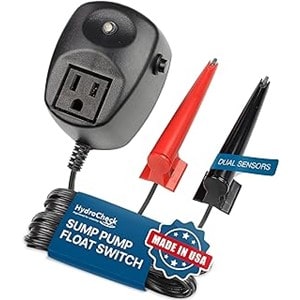
The HydroCheck HC6000 is a highly adjustable sump pump float switch designed to prevent sump pump short cycling. Unlike traditional float switches, the HC6000 allows you to customize the distance between the pump's ON and OFF levels from ½ inch to 10 feet. Each sensor connects to the controller with its own long wire, making installation on the discharge pipe simple and flexible. By controlling pump run times and cycling frequency, the HydroCheck HC6000 helps improve sump pump performance, reduce motor wear, and extend pump life.
Best Float Switch Type To Avoid For Groundwater Contamination From Calcium Carbonate
Vertical reed float switches are often unreliable in sump pits where groundwater contains high levels of calcium carbonate or mineral deposits. Because the float moves up and down on an exposed float rod, mineral buildup can gradually interfere with normal switch operation.
Over time, calcium carbonate accumulates on the float rod and around the magnetic portion of the float that activates the switch. As buildup increases, the float may begin sticking or fail to trigger properly.
Common failure problems include:
- Float stuck in the ON position causing continuous pump operation
- Pump motor overheating or burning out
- Float failing to activate the pump
- Increased risk of basement flooding
For years, our sump pumps failed every 2-3 years because they used vertical reed float switches. Our groundwater contains significant calcium carbonate, which caused repeated float switch problems.
After switching to Zoeller sump pumps with vertical snap-action float switches, our float switches began lasting 9 years. A plumber friend later explained why the reed switches were failing so frequently in our groundwater conditions.
Best One-Fourth Horse Power Sump Pump for Small Basements
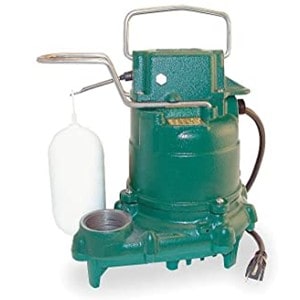
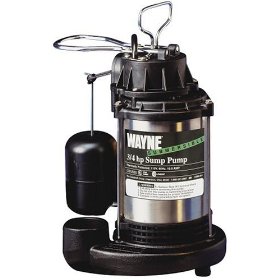
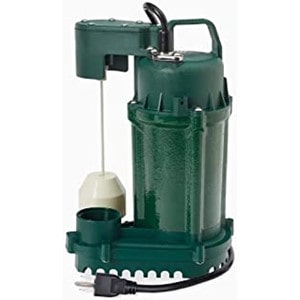
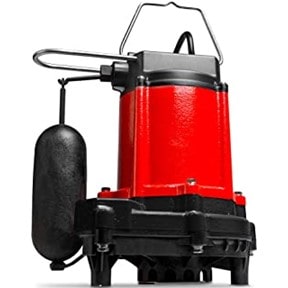
The Zoeller Water Ridd'r III WM49 is one of the best 1/4 HP sump pumps for homeowners who want a durable, long-lasting pump with excellent clog resistance. Built with a rugged cast iron housing and a reliable vortex impeller, this sump pump is designed to deliver dependable basement flood protection with minimal maintenance.
The WM49 works especially well in small to medium-sized basement sump systems where reliability, quiet operation, and durability matter more than maximum pumping power.
Compared to cheaper plastic-body sump pumps, the Zoeller Water Ridd'r III WM49 offers superior durability and better heat dissipation thanks to its cast iron construction. Many homeowners report the pump lasting 10 years or more with minimal maintenance, making it a strong long-term investment for basement waterproofing.
Another standout feature is the compact float switch design, which performs well in narrow sump basins where traditional tethered floats can become stuck or tangled.
Installation is straightforward thanks to compatibility with standard 1-1/2 inch discharge pipe systems.
Pros
- Durable cast iron construction
- Compact design fits smaller sump pits (12 inch in diameter)
- Quiet and energy-efficient motor (4 Amp; 115 Volts)
- Durable cast iron construction
- Excellent long-term reliability reputation
Cons
- Lower pumping capacity than most 1/3 HP sump pumps
- More expensive than thermoplastic models
In terms of performance, the WM49 delivers excellent pumping capability for a 1/4 HP submersible sump pump:
- 32 gallons per minute at 0 feet of head
- 25 GPM at a 10-foot lift
- Maximum head height of 18 feet
In a standard 18-inch diameter sump pit, each pump cycle removes approximately 7 gallons of water.
Why Should You Buy This 1/4 HP Sump Pump?
Overall, the Zoeller Water Ridd'r III WM49 is one of the best 1/4 HP sump pumps for homeowners who want a reliable, low-maintenance, and durable basement sump pump. Its cast iron construction, clog-resistant vortex impeller, compact float switch, and strong reputation for longevity make it an excellent choice for small to medium residential sump systems.
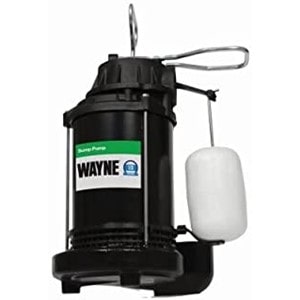
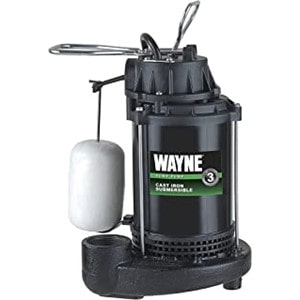
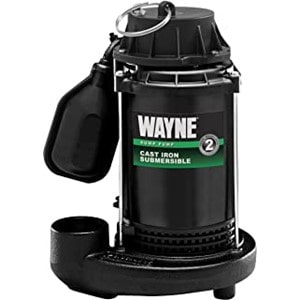
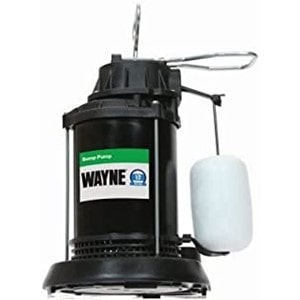
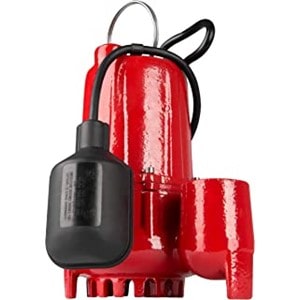
The best 1/3 HP sump pumps provide enough pumping power for most residential basements while keeping energy consumption low. After comparing durability, pumping performance, switch design, and long-term reliability, the Zoeller M53 and the Wayne CDU790 (including the stainless steel Wayne CDU790SS) stand out as the top choices for homeowners.
Both are submersible sump pumps that use a vertical snap-action float switch, a design that performs well in sump pits where calcium, iron, and mineral buildup can cause problems for other switch types.
While both pumps are highly rated, there are significant differences in construction, durability, pumping performance, and long-term reliability.
Quick Verdict
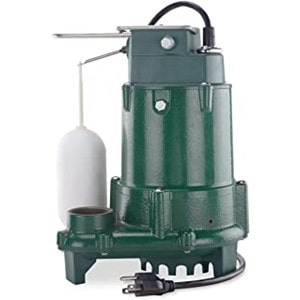
Best Overall: Zoeller M53
Heavy-duty cast iron construction, excellent reliability, and a decades-long reputation among plumbers.
Best for Durability: Zoeller M53
Best Value & Performance: Wayne CDU790
Higher pumping capacity at a lower price point.
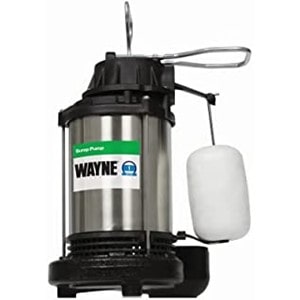
Best Rust-Resistant Option: Wayne CDU790SS
Offers the same performance as the CDU790 with a stainless steel housing that won't rust.
Zoeller M53 vs Wayne CDU790 Comparison
Feature
Zoeller M53
Wayne CDU790
Wayne CDU790SS
Horsepower
1/3 HP
1/3 HP
1/3 HP
Flow Rate @ 10 ft Lift
2,040 GPH
2,700 GPH
2,700 GPH
Maximum Head Lift
19.25 ft
20 ft
20 ft
Pump Housing
Cast Iron
Carbon Steel
Stainless Steel
Switch Housing
Cast Iron
Thermoplastic
Thermoplastic
Base Material
Cast Iron
Cast Iron
Cast Iron
Power Cord Length
9 ft
8 ft
8 ft
Float Switch Type
Vertical Float
Vertical Float
Vertical Float
Best For
Durability
Value
Corrosion Resistance
Construction and Durability
One of the biggest differences between these pumps is how they are built.
The Zoeller M53 is often referred to as 'the plumber's choice' and has earned a reputation for reliability over several decades. Many professional plumbers continue to recommend it because of its heavy-duty construction and long service life.
Zoeller M53: Built for Longevity
Pros
- Cast iron motor housing
- Cast iron pump housing
- Cast iron switch case
- Excellent heat dissipation
- Heavy-duty construction designed for long service life
- Widely available Online
- Reliable vertical float switch design
- Proven track record dating back to the 1980s
Cons
- Lower pumping capacity than the Wayne
Wayne CDU790: Built for Value and Performance
Pros
- Higher pumping capacity
- Lower purchase price
- Widely available in Big Box Stores and Online
- Reliable vertical float switch design
- Strong overall value
Cons
- More thermoplastic components
- Lighter-duty construction than the Zoeller
Wayne CDU790SS: Added Corrosion Resistance
The CDU790SS offers the same pumping performance as the standard CDU790 but replaces the carbon steel housing with stainless steel.
Pros
- Stainless steel pump housing resists rust
- Same high pumping capacity as the CDU790
- Good balance of durability and performance
Cons
- Thermoplastic switch housing
- Not as heavily built as the Zoeller M53
Motor Design
One of the biggest differences between these pumps is how they are built.
Zoeller manufactures its own motors, which contributes to the company's long-standing reputation for reliability and quality control.
Wayne pumps are assembled using a combination of domestic and imported components. While Wayne pumps generally perform well, many homeowners and plumbing professionals view Zoeller's in-house motor design as a long-term advantage.
Pumping Performance
If maximum water removal is your primary concern, the Wayne pumps have a clear advantage.
Flow Rate at 10 Feet of Lift
- Wayne CDU790 pumps: 45 GPM and 2,700 GPH.
- Wayne CDU790SS pumps: 45 GPM and 2,700 GPH.
- Zoeller M53 pumps 34 GPM and 2,700 GPH.
The Wayne pumps move approximately 32% more water at 10 feet of vertical lift.
However, maximum head height (head pressure) is nearly identical:
- Wayne CDU790 & CDU790SS maximum head lift is 20 feet.
- Zoeller M53 maximum head lift is 19.25 feet
For homeowners dealing with heavy water intrusion, the Wayne's higher flow rate can be an advantage. However, many plumbers still prefer the Zoeller M53 for its long-term durability and reliability.
For most homeowners, the Zoeller M53 still provides more than enough pumping capacity to keep a basement dry.
The Wayne's higher flow rate becomes most beneficial in homes experiencing severe groundwater intrusion, rapid water inflow, or unusually demanding drainage conditions.
Power Cord and Additional Features
The Zoeller M53 includes a few premium touches that are not found on the Wayne models.
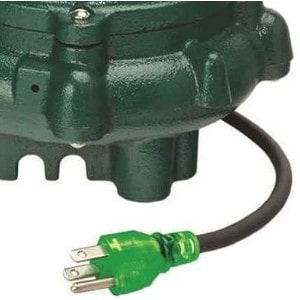
One of the most useful is the illuminated power plug. The LED light lets homeowners quickly confirm that power is reaching the pump, making troubleshooting easier during storms or power-related issues.
The Zoeller M53 also includes a slightly longer power cord.
Power Cord Length
- Zoeller M53: 9 feet
- Wayne CDU790: 8 feet
- Wayne CDU790SS: 8 feet
While this may seem minor, the extra foot of cord can occasionally simplify installation.
Which 1/3 HP Sump Pump Should You Buy?
For most homeowners, the Zoeller M53 is the best 1/3 HP sump pump overall.
Its cast iron construction, in-house motor design, and decades-long reputation for reliability make it one of the most trusted sump pumps on the market. If your goal is maximum durability and long service life, the Zoeller M53 is difficult to beat.
Choose the Wayne CDU790 if your priority is moving as much water as possible while keeping costs down. Its significantly higher pumping capacity makes it an excellent value and a strong choice for homes with heavier groundwater conditions.
If corrosion resistance is important, the Wayne CDU790SS offers the same pumping performance as the CDU790 while adding a stainless steel housing that won't rust over time.
Choosing the best 1/2 HP sump pump is critical for keeping your basement dry during heavy rain or flooding. These pumps are designed to handle large volumes of water and work reliably under demanding conditions.
The two best 1/2 HP sump pumps are the Zoeller M95 and the Wayne CDU800.
Why a 1/2 HP Sump Pump Matters
A 1/2 HP sump pump is ideal for:
- Homes with high water tables
- Basements prone to frequent flooding
- Homeowners who want a balance of power and affordability
With the right pump, you can prevent costly water damage and enjoy peace of mind.
Quick Comparison: Zoeller M95 vs Wayne CDU800
Feature
Zoeller M95
Wayne CDU800
Motor
1/2 HP
1/2 HP
Flow Rate @ 10 ft Lift
67 GPM
64 GPM
Maximum Head Lift
26 ft
20 ft
Float Switch
Upgraded Snap-Action (3 Million Cycles)
Standard Snap-Action (1 Million Cycles)
Moisture Protection
Extra Rubber Boot Seal
Standard Design
Construction
Cast Iron Motor Housing, Pump Housing, Base & Switch Case
Carbon Steel Housing, Cast Iron Base, Thermoplastic Switch Case
Warranty
5 Years
3 Years
Typical Price
~$460
~$179
Best For
Heavy Flooding & Maximum Durability
Budget-Friendly Basement Protection
Winner
Best Overall
Best Value
Float Switch Reliability
The float switch is the heart of a sump pump-it tells the pump when to turn on and off. Reliability here is key
Both one-half horse power sump pumps use the snap-action vertical switch type; however with differences.
Quick Comparison: Zoeller M95 vs Wayne CDU800 Float Switch
Feature
Zoeller M95
Wayne CDU800
Float Type
Solid polypropylene
Solid polypropylene
Switch Type
Upgraded snap-action
Standard snap-action
Pump Cycles
Up to 3 million
~1 million
Moisture Protection
Extra rubber boot seal
Standard
Maintenance
Low; unaffected by minerals
Low; unaffected by minerals
Key Takeaways:
- Zoeller's upgraded float switch lasts 3x longer than standard version.
- Both pumps use durable polypropylene floats, resistant to punctures or water ingress.
- Vertical snap-action switches minimize maintenance, even in mineral-heavy groundwater.
Construction Materials and Build Quality
Durable construction and high-quality materials are critical for a sump pump that can handle long-term flooding without failure. For decades, Zoeller has built a reputation as a family-owned company known for exceptional build quality and durable construction materials.
The Zoeller M95 is manufactured in the USA using premium cast iron for the motor housing, pump housing, pump base, and switch case. Each unit undergoes rigorous performance and leak testing to ensure reliability under demanding conditions.
In comparison, Wayne Pump sources components from multiple domestic and international suppliers and assembles the CDU800 at their U.S. facility. The CDU800 features a carbon steel pump housing, a cast iron base, and a thermoplastic switch case. While functional, this combination does not provide the same long-term durability as a fully cast iron design.
Why Cast Iron is Superior to Carbon Steel:
Cast iron is preferred for sump pump housings because it provides better heat dissipation, corrosion resistance, and long-term durability compared to carbon steel.
Why Zoeller Prefers Using Cast Iron For Their Sump Pumps
In the following video, Zoeller discusses why cast iron is their material of choice for sump pump construction. Their explanation provides valuable insight into how motor and pump housing materials can influence a pump's longevity and performance.
Cast Iron vs Carbon Steel Sump Pump: Why Zoeller M95 Stands Out
Better Heat Dissipation
Sump pumps, like the Zoeller M95 and Wayne CDU800, can generate significant heat during extended operation. The cast iron housing of the M95 absorbs and disperses heat more effectively than carbon steel, helping transfer heat away from the motor and into the surrounding water. This improved heat management can extend motor life during continuous pumping. For homeowners comparing cast iron vs carbon steel sump pump, this is a key advantage of the M95.
Superior Corrosion Resistance
Both the Zoeller M95 and Wayne CDU800 are epoxy-coated to resist rust, but cast iron provides long-term durability even if coatings are scratched or worn. Carbon steel is more prone to rust over time in wet, moisture-rich environments. Choosing a cast iron sump pump like the Zoeller M95 ensures reliable performance and a longer service life.
Greater Stability in the Sump Basin
The heavy cast iron construction of the Zoeller M95 keeps the pump firmly grounded, preventing movement or tipping that could jam the float switch and cause system failure. Weighing roughly 20 pounds more than the Wayne CDU800, the M95 offers superior stability during high-volume pumping. For those searching for Zoeller M95 vs Wayne CDU800, this weight difference is an important consideration for long-term reliability.
Why Cast Iron Sump Pumps Are Worth It
Overall, choosing a cast iron sump pump like the Zoeller M95 provides better heat dissipation, superior corrosion resistance, and greater stability compared to carbon steel options like the Wayne CDU800. If you're weighing Zoeller M95 vs Wayne CDU800, the M95's cast iron housing makes it a standout choice for durability and performance.
Pumping Performance
Although both pumps use a 1/2 HP motor, the Zoeller M95 produces stronger overall lift performance.
At 10 feet of vertical lift:
- Zoeller M95 pumps 67 gallons per minute.
- Wayne CDU800 pumps 64 gallons per minute.
Maximum head lift:
- Zoeller M95 is 26 feet.
- Wayne CDU800 is 20 feet.
The higher maximum lift rating demonstrates the strength of the Zoeller motor under demanding pumping conditions.
Price and Value
The Wayne CDU800 is designed for the budget-minded homeowner and typically costs around $179.
The premium Zoeller M95 usually costs around $460, but the additional cost includes several important upgrades.
- 5-year warranty
- Upgraded 3 million cycle float switch
- Additional moisture protection around the switch arm
- Heavier cast iron construction
- LED power plug that illuminates when power is available
Which 1/2 HP Sump Pump Should You Buy?
For homeowners seeking strong pumping performance at a lower price, the Wayne CDU800 is a solid value option.
For homeowners who want maximum durability, stronger lift capability, and long-term reliability during heavy flooding conditions, the Zoeller M95 is one of the best professional-grade 1/2 HP sump pumps.
The Wayne CDU980E is the best 3/4 HP sump pump for homeowners dealing with high groundwater levels, frequent basement flooding, or large sump pits. With a powerful 5,490 GPH pumping capacity, durable stainless steel construction, and a reliable snap-action float switch, it delivers premium performance at an affordable price. Backed by a 5-year warranty, the CDU980E offers an excellent combination of power, durability, and value.
Why the Wayne CDU980E Stands Out
- Powerful Pumping: Moves up to 5,490 gallons per hour (91 GPM) at 0 feet, 4,620 GPH (77 GPM) at 10 feet, and 3,500 GPH at 20 feet-one of the highest-performing pumps in its price range.
- Durable Construction: Stainless steel housing resists corrosion, while a cast iron base adds stability during heavy pumping cycles.
- Compact Footprint: Fits in sump pits as small as 11 inches.
- Top-Suction Intake: Eliminates the need for an air-lock relief hole, providing efficient operation in clear-water sump pits.
- Snap-Action Float Switch: Ideal for areas with high calcium content, as it resists mineral buildup better than magnetic reed switches.
- Lightweight Design: Weighs just 20 pounds, making installation easier, though some movement may occur in continuous pumping scenarios.
Wayne CDU980E Performance Specs
Head Height
Pumping Rate
0 feet
5,490 GPH (91 GPM)
10 feet
4,620 GPH (77 GPM)
20 feet
3,500 GPH
This makes the CDU980E perfect for homes with high groundwater levels or frequent basement flooding.
Pros & Cons of the Wayne CDU980E
Pros:
- High pumping capacity
- Durable stainless steel and cast iron construction
- Compact, easy-to-install design
- Snap-action float switch resists mineral buildup
- Excellent value with a 5-year warranty
Cons:
- Not suitable for pits with debris or small solids
- May short cycle in pits smaller than 18 inches
Value and Warranty
At around $190 with a 5-year warranty, the CDU980E offers premium-level performance without breaking the budget.
Who Should Buy The CDU980E 3/4 HP Sump Pump?
The Wayne CDU980E is ideal for homeowners with large sump pits who want a high-capacity, reliable pump that will last for years. Its combination of durable construction, strong pumping performance, and excellent value makes it a standout choice in its category.
The Wayne CDU1000 is one of the best 1 HP sump pumps available for homeowners dealing with severe basement flooding, heavy groundwater intrusion, or high water tables. Its powerful motor, durable float switch, and reliable design make it ideal for demanding residential applications.
Wayne CDU1000 Quick Specs
- Motor: 1 HP
- Maximum Flow Rate: 6,100 GPH (101 GPM)
- Switch Type: Vertical Snap-Action Float
- Construction: Stainless Steel Housing with Cast Iron Base
- Discharge Size: 1-1/2 Inches
- Warranty: 5 Years
Pumping Performance
The CDU1000 delivers exceptional water removal capacity for residential sump applications. Even at higher head heights, it maintains strong flow:
Head Height
Pumping Rate
0 feet
6,100 GPH (101 GPM)
10 feet
5,100 GPH (85 GPM)
20 feet
3,800 GPH
With a 5-inch float switch operating range, the CDU1000 removes about 5 gallons of water per cycle in an 18-inch diameter pit. Homeowners should note that this high-capacity pump may short cycle if water enters the sump pit too slowly, making it best suited for homes with significant water intrusion.
Why the Wayne CDU1000 Stands Out
What separates the CDU1000 from many competing 1 HP sump pumps is its vertical snap-action float switch. Unlike vertical reed switches used by other pumps, this design is less likely to fail in water containing minerals such as calcium carbonate. Wayne rates this switch for up to 1 million pump cycles, making it a durable choice for frequent use.
The CDU1000 also excels in high-head pumping performance. At 10 feet of discharge height, it still moves 5,100 GPH-significantly more than many standard residential pumps.
Construction and Design
The CDU1000 combines stainless steel motor housing and fasteners with a cast iron base. Adding the cast iron base provides:
- Improved heat dissipation
- Stable operation during heavy pumping
- Reduced movement in high-flow conditions
Its top-suction design helps prevent air lock, but it is not designed for handling debris or muddy water. The pump performs best in clean sump pits with minimal sediment.
CDU1000 Head Pressure Performance (Maximum Head Height)
When speaking about Head Pressure and Maximum Head Height, it is important to remember that as a pump pushes water higher, its flow rate decreases. When a pump reaches its maximum head height/pressure, the water flow will drop to exactly zero.
The pump's high-flow capability makes it ideal for:
- Homes with rapid groundwater intrusion
- Basements prone to heavy rain or snowmelt flooding
- High water tables
- Long horizontal or vertical discharge runs.
Warranty Information
The CDU1000 comes with a 5-year limited warranty, covering defects in materials and workmanship. Extended warranty coverage is especially important for high-power pumps operating under demanding conditions.
Pros & Cons of the Wayne CDU1000
Pros:
- Extremely powerful 1 HP motor
- Excellent high head-pressure performance
- Durable vertical snap-action float switch. Less vulnerable to mineral contamination.
- Top suction design helps prevent air lock
- 5-year warranty
- Widely available brand
Cons:
- May short cycle in low-water environments
- 5-year warranty
- Not ideal for muddy or debris-filled sump pits
- More pump power than many homes actually need
- Stainless steel dissipates less heat than full cast iron designs.
Best Usage & Who Should Buy
The Wayne CDU1000 is best to buy for the following conditions:
- Medium to large basement
- Deep sump pit
- Home with severe water intrusion or rapid groundwater accumulation
- High water table area
- Properties with frequent storm flooding
- Long vertical or horizontal discharge runs
The Wayne CDU1000 is one of the strongest and most reliable 1 HP sump pumps available. Its durable float switch, high pumping capacity, and 5-year warranty make it ideal for homeowners with medium to large basements, high water tables, or severe water intrusion. For properties with minor seepage, a smaller 1/2 HP or 3/4 HP pump may be a better fit.
Conclusion: Choose the Right Sump Pump with Confidence
Choosing the best sump pump for your basement starts with understanding your home's unique water management needs. Whether you're dealing with occasional moisture, frequent basement flooding, or heavy groundwater intrusion, the right system can make a significant difference in protecting your home.
The results from this sump pump finder quiz are designed to help you narrow your options and focus on the sump pumps that best match your basement conditions, pumping requirements, and budget. By comparing the recommended models, specifications, pros and cons, and ideal use cases, you can make a more informed decision with confidence.
Remember, the best sump pump isn't necessarily the most expensive model: it's the one that provides the right level of protection for your specific situation. Taking the time to choose the right basement sump pump today can help reduce the risk of water damage, mold growth, and costly repairs in the future.
Review your personalized recommendations above and explore the models that best fit your needs. With the right sump pump in place, you'll be better prepared to keep your basement dry, protected, and ready for whatever the next storm brings.
Quick Shop Sump Pumps By Horse Power
As Amazon Associates we make a commission from qualifying products. We use our commissions to cover our time creating pages like this. Your purchase price is the same as if you shop directly on Amazon.
Price at the time of publish gives you an idea of what the price may be though it is subject to change.
Click Shop Recommended Sump Pumps By HP To See Recommended Sump Pumps reviewed above.
THE HELPFUL PUMP PLACE where you can become an educated shopper. Review - Compare - Shop And Find The Best Pumps Selection For Your Water Pumping Needs.